
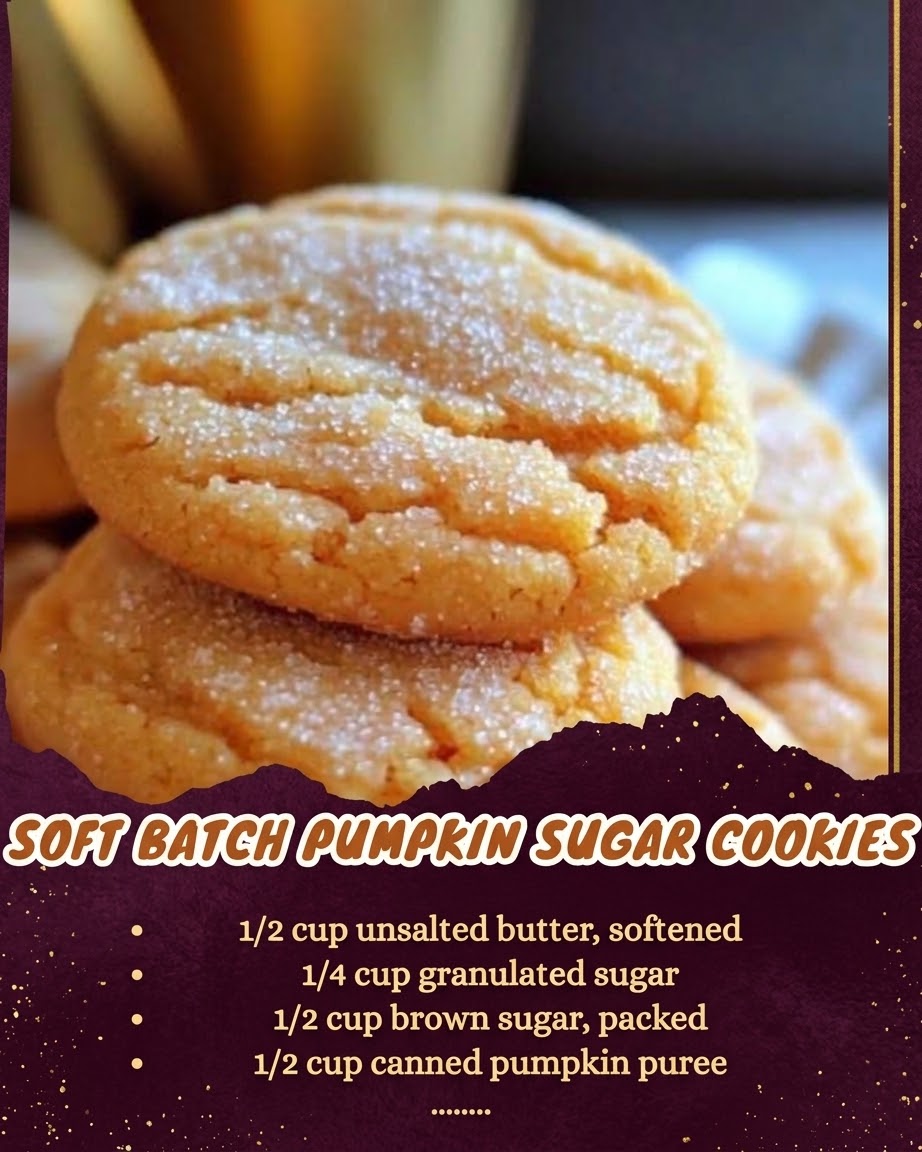
When autumn arrives, warm kitchen aromatics—cinnamon, nutmeg, ginger, and freshly baked vanilla dough—fill the air. Among seasonal baked goods, few treats offer the perfect balance of comfort, texture, and festive spice quite like Soft Batch Pumpkin Sugar Cookies.
Unlike crunchy snap biscuits or overly cakey pumpkin drops, a true soft batch cookie strikes a delicate balance. It features a crisp, sugar-crusted exterior that gives way to a dense, melt-in-your-mouth center. Achieving this textural harmony requires a deep understanding of food science, proper ingredient handling, and precise baking techniques.
This comprehensive guide covers everything needed to bake bakery-quality pumpkin sugar cookies at home, from ingredient mechanics to step-by-step methods and troubleshooting.
The Culinary Science of Soft Batch Cookies
Baking is an exact science where every ingredient plays a vital role in structure, moisture retention, and flavor development.
1. The Moisture Challenge of Pumpkin Puree
Pumpkin puree is naturally high in water (roughly 90% water content). When added directly to cookie dough, excess moisture hydrates the flour’s proteins (gliadin and glutenin), forming strong gluten networks. This transforms a dense cookie into a spongy, cake-like texture.
To achieve a true “soft batch” chewy consistency rather than a cake-like structure, you must extract excess liquid from the pumpkin puree before mixing it into the dough. Blotting the puree with paper towels reduces water content while concentrating natural pumpkin flavor and color.
2. Brown Sugar vs. White Sugar Dynamics
- Granulated White Sugar: Hygroscopic to a lesser degree, white sugar promotes spreading during baking and creates crisp edges through caramelization.
- Brown Sugar: Contains molasses, which introduces glucose and fructose. These sugars retain moisture during and after baking, keeping the cookie soft for days. Combining light or dark brown sugar with granulated sugar balances crisp edges with a soft center.
3. Fat and Emulsification
Unsalted butter provides rich flavor and controls spread. Creaming softened butter with sugar incorporates air pockets that rise gently during baking. Using an egg yolk instead of a whole egg supplies rich fats (lecithin) without adding egg white proteins, which can dry out cookies or make them overly fluffy.
Complete Recipe Specifications
- Prep Time: 20 minutes
- Chilling Time: 45 minutes
- Bake Time: 10–12 minutes per batch
- Total Time: ~1 hour 20 minutes
- Yield: Approximately 24 standard cookies (1.5 tbsp each)
- Skill Level: Intermediate
Ingredients & Exact Measurements
The Dry Base
- 2 ½ cups (300g) all-purpose flour (bleached or unbleached; spooned and leveled)
- 1 tsp (5g) baking soda (for leavening and browning)
- ½ tsp (2.5g) baking powder (for a slight top rise)
- ½ tsp (3g) fine sea salt or kosher salt (to balance sweetness)
- 2 tsp (4g) artisanal pumpkin pie spice (see custom blend below)
The Wet Base
- ½ cup (115g) unsalted butter, softened to ~65°F (18°C)
- ½ cup (100g) light brown sugar, packed
- ¼ cup (50g) granulated white sugar
- ½ cup (120g) 100% pure canned pumpkin puree (blotted down to approximately ⅓ cup / 80g)
- 1 large egg yolk, room temperature
- 1 ½ tsp (7.5ml) pure vanilla extract
The Rolling Coating
- â…“ cup (65g) granulated white sugar
- ½ tsp ground cinnamon (optional, for a cinnamon-sugar crust)
Custom Pumpkin Pie Spice Blend
Pre-packaged spice mixes often sit on store shelves for months, losing volatile aromatic oils. Preparing a fresh batch yields vibrant, warm flavors:
- 1 tbsp ground Ceylon cinnamon
- 1 tsp ground ginger
- ½ tsp ground nutmeg (freshly grated preferred)
- ½ tsp ground allspice
- ¼ tsp ground cloves
Mix all ground spices thoroughly and store any excess in an airtight glass jar away from direct light.
Step-by-Step Baking Method
Step 1: Prep and Blot the Pumpkin Puree
- Line a small rimmed plate or cutting board with three layers of heavy-duty paper towels.
- Scoop ½ cup of canned pumpkin puree onto the center.
- Spread the puree slightly, then fold another three layers of paper towels over the top.
- Press gently with your hands to absorb excess liquid.
- Peel back the paper towel. Repeat with fresh towels if the pumpkin still appears visibly wet. The blotted puree should look thick and paste-like.
Step 2: Sift the Dry Ingredients
- Place a fine-mesh sieve over a medium mixing bowl.
- Add the all-purpose flour, baking soda, baking powder, salt, and pumpkin pie spice.
- Sift together to break up clumps and evenly distribute the leavening agents.
- Whisk thoroughly for 30 seconds to incorporate air. Set aside.
Step 3: Cream the Butter and Sugars
- In a large bowl (or stand mixer bowl with a paddle attachment), combine the softened butter, packed brown sugar, and granulated white sugar.
- Beat on medium-high speed for 2 to 3 minutes. The mixture should transition from dark brown to a light, creamy tan with a fluffy texture.
- Scrape down the sides and bottom of the bowl with a rubber spatula to ensure uniform creaming.
Step 4: Incorporate Wet Ingredients
- Add the egg yolk and vanilla extract to the creamed butter and sugar. Beat on medium speed for 45 seconds until smooth.
- Add the blotted pumpkin puree. Beat on low-medium speed just until fully combined. (Note: The mixture may look slightly curdled due to water-fat interaction; this is normal and smooths out once flour is added).
Step 5: Form the Dough
- Set the mixer to its lowest setting (or use a wooden spoon).
- Gradually add the sifted dry ingredients in three distinct batches.
- Mix just until the flour pockets disappear. Overmixing develops excess gluten, making cookies tough rather than soft.
- The resulting dough should be thick, slightly sticky, and highly aromatic.
Step 6: Chill the Dough
- Cover the bowl tightly with plastic wrap, pressing it directly against the dough surface to prevent skin formation.
- Refrigerate for at least 45 minutes (up to 48 hours).
- Why chilling matters: Chilling solidifies the butter fats, preventing cookies from spreading excessively in the oven. It also allows flour proteins and starches to fully hydrate, enhancing overall flavor.
Step 7: Preheating & Equipment Setup
- Position oven racks in the upper-middle and lower-middle positions.
- Preheat the oven to 350°F (175°C).
- Line two heavy-gauge aluminum baking sheets with parchment paper or silicone baking mats. Avoid dark, non-stick sheets, which absorb excess heat and burn cookie bottoms.
Step 8: Scoop, Roll, and Coat
- In a small shallow bowl, combine â…“ cup granulated white sugar and optional cinnamon.
- Remove chilled dough from the refrigerator. Use a 1.5-tablespoon cookie scoop to measure uniform dough balls (~35g each).
- Lightly roll each portion between your palms to form a smooth sphere.
- Drop each ball into the sugar coating, tossing to cover the entire surface thoroughly.
Step 9: Arrange and Shape
- Place coated dough spheres onto prepared baking sheets, leaving 2 to 2.5 inches of space between each.
- Because this dough is dense and low-moisture, it will not spread drastically on its own. Use the flat bottom of a glass or measuring cup to gently press down on each ball, flattening it into a disk about ½ inch thick.
Step 10: Bake and Monitor
- Slide baking sheets into the preheated oven. Bake for 10 to 12 minutes.
- At the 6-minute mark, rotate sheets 180 degrees (and swap upper/lower rack positions) to ensure even heat exposure.
- Indicators of doneness: The edges should look set and matte, while the centers remain slightly soft and puffy. Avoid overbaking until edges darken; cookies continue setting on the hot sheet after removal.
Step 11: Cooling Process
- Remove baking sheets from the oven and set on heat-safe surfaces.
- Allow cookies to rest undisturbed on hot pans for 5 minutes. This completes cooking without drying out centers.
- Transfer cookies gently using a thin spatula to a wire cooling rack. Allow them to cool completely for 15–20 minutes before serving.
Flavor Variations & Enhancements
While this core recipe delivers classic pumpkin flavor, custom add-ins allow for tailored variations:
1. Cream Cheese Frosting Top
For a richer finish, top cooled cookies with a classic cream cheese frosting:
- 4 oz (115g) cream cheese, softened
- 2 tbsp (30g) unsalted butter, softened
- 1 cup (120g) powdered sugar
- ½ tsp vanilla extract
Beat cream cheese and butter until smooth, sift in powdered sugar, add vanilla, and whip until fluffy. Pipe or spread onto cooled cookies.
2. Spiced White Chocolate Chip
Fold ¾ cup (130g) of high-quality white chocolate chips or chopped real white chocolate blocks into the dough at the end of Step 5. White chocolate’s milky sweetness pairs well with warm pumpkin spices.
3. Salted Caramel Drizzle
Drizzle warm homemade or store-bought caramel sauce across cooled cookies, then finish with a light pinch of flaky Maldon sea salt.
Troubleshooting Common Baking Issues
| Issue | Root Cause | Preventive Solution |
| Cookies are cakey/spongy | Un-blotted pumpkin puree added too much water; or overmixing formed excess gluten. | Blot pumpkin puree thoroughly with paper towels. Mix dry ingredients until just combined. |
| Cookies spread into thin puddles | Warm butter was used, or dough was not chilled long enough. | Use butter softened to 65°F (not melted). Chill dough for at least 45 minutes. |
| Bottoms of cookies burned | Dark baking sheets used, or oven temperature ran too high. | Use light-colored aluminum pans and line with parchment paper. Use an independent oven thermometer. |
| Flavor is bland | Spices are stale, or salt was omitted. | Use fresh spices ground within the last six months. Do not reduce salt. |
Storage, Shelf Life, and Freezing Instructions
Room Temperature Storage
Place fully cooled cookies in an airtight plastic container or glass jar. Add a sheet of parchment paper between layers to prevent sticking.
- Pro Tip: Place a single slice of plain white bread inside the container. The cookies absorb moisture from the bread, remaining soft for up to 7 days.
Freezing Dough
- Scoop and shape dough balls, then roll in sugar as directed.
- Place balls on a parchment-lined baking sheet close together (without touching) and flash-freeze for 2 hours until solid.
- Transfer frozen dough balls into a heavy-duty freezer zip-top bag.
- Freeze for up to 3 months.
- Baking from frozen: Bake directly from the freezer at 350°F (175°C), adding 1 to 2 extra minutes to total bake time.
Freezing Baked Cookies
Allow baked cookies to cool completely. Wrap individual cookies in plastic wrap, then store in an airtight freezer-safe container for up to 2 months. Thaw at room temperature for 30 minutes before serving.
Frequently Asked Questions
Can I use fresh pumpkin instead of canned?
Canned pumpkin puree is recommended because its moisture level and texture are consistent. Fresh homemade pumpkin puree contains significantly more water and varies in sweetness and starch. If using fresh pumpkin, roast it thoroughly and drain it in cheesecloth overnight before blotting.
Can I make this recipe gluten-free?
Yes. Substitute all-purpose flour with an equal weight (300g) of a 1:1 gluten-free baking flour blend that contains xanthan gum. Texture may vary slightly, but dough handling remains similar.
Why use unsalted butter instead of salted butter?
Different butter brands add varying amounts of salt. Using unsalted butter allows precise control over total sodium content, ensuring consistent flavor balance.
Final Thoughts
Baking exceptional soft batch pumpkin sugar cookies requires attention to simple details: controlling pumpkin moisture, creaming fat and sugar properly, and avoiding overbaking. Following these steps yields soft, fragrant cookies with balanced warmth and spice—ideal for autumn baking, festive platters, or cozy seasonal treats.