
Christmas cactus is one of those houseplants that can seem almost magical. A healthy plant can produce beautiful flowers year after year, and the best part is that you can easily turn pieces of an existing plant into new Christmas cactus plants.
If you’ve ever wondered how to propagate Christmas cactus, you’re in luck. Christmas cactus propagation from stem cuttings is simple, inexpensive, and doesn’t require complicated equipment.
With just a healthy cutting, a suitable growing medium, a small pot, and a little patience, you can grow new plants to keep, share with friends, or give as gifts.
In this guide, you’ll learn how to propagate Christmas cactus from cuttings, when to take cuttings, how to prepare them, how deep to plant them, how much water and light they need, how long rooting takes, and what to do once roots develop.
What Is a Christmas Cactus?
Christmas cactus is a popular flowering houseplant from the Schlumbergera genus. Unlike desert cacti, holiday cacti are tropical or subtropical epiphytes and naturally grow in humid forest environments.
That’s why Christmas cactus prefers bright, indirect light, good drainage, and more consistent moisture than many desert cacti.
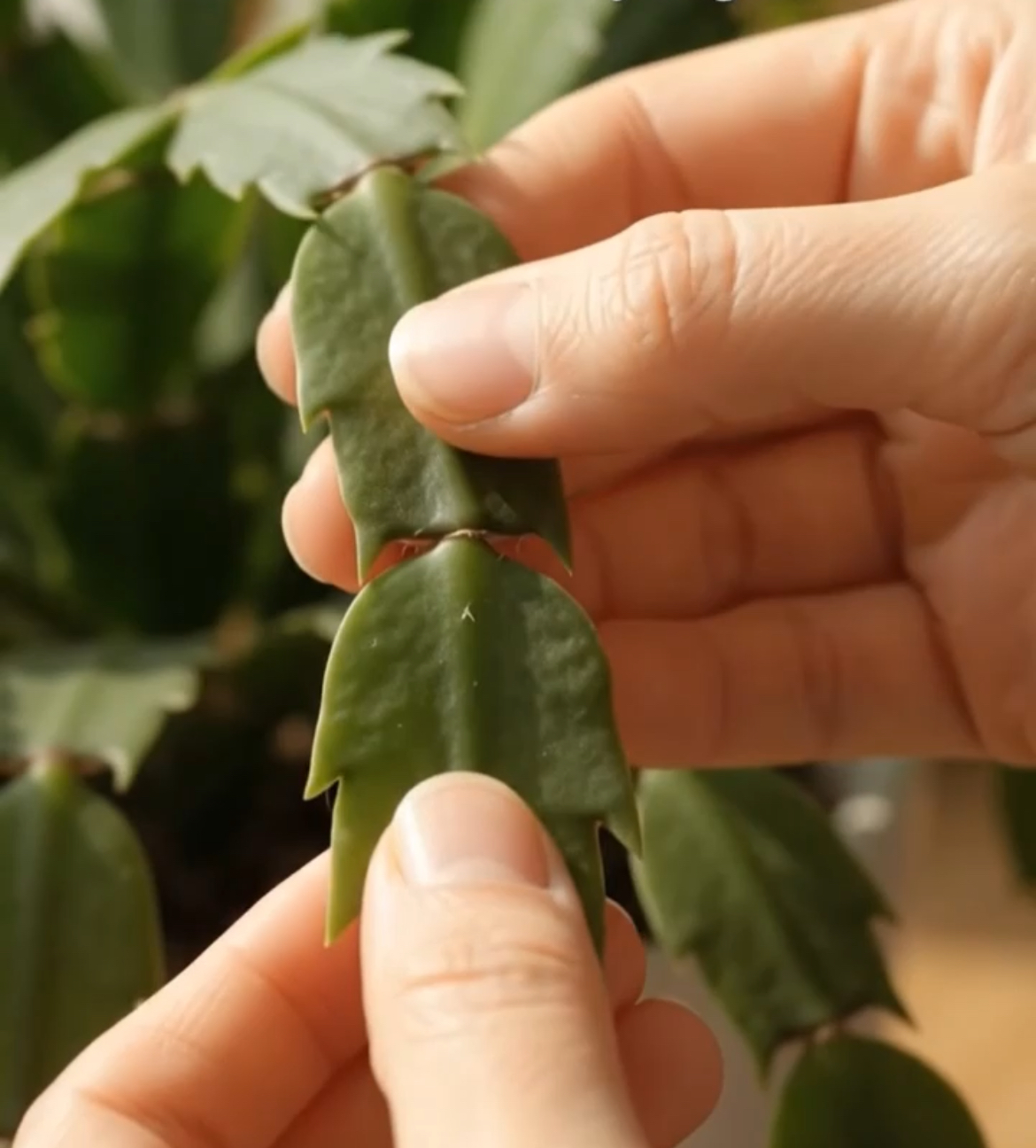
Its flattened green sections are actually modified stems rather than traditional leaves. These segmented stems make propagation particularly easy because new plants can be produced from just a few sections.
Can You Grow a Christmas Cactus From a Cutting?
Yes! Christmas cactus is very easy to propagate from stem cuttings.
University Extension recommendations commonly call for taking a section containing 2 to 5 stem segments, allowing the cut end to callus, and then inserting the cutting into a moist, well-draining rooting medium.
This means you don’t need seeds to create another Christmas cactus.
A small piece of a healthy plant can eventually develop its own roots and grow into a completely new plant.
How to Propagate Christmas Cactus Step by Step
1. Choose a Healthy Christmas Cactus
Start with a healthy, established plant.
Look for stems that are:
- Green and firm
- Free from soft or mushy areas
- Free from obvious pests
- Not severely damaged
- Producing healthy new growth
Avoid taking cuttings from stems that are yellowing, rotting, or badly dehydrated.
Tip: Propagating from a healthy parent plant gives your new cutting a much better starting point.
2. Take a Christmas Cactus Cutting
Choose a stem section containing approximately 2 to 5 segments.
Christmas cactus cuttings can be removed by gently pinching or twisting at the joint between segments. You can also use clean scissors or pruning shears.
The important part is making the cutting at a natural joint.
University of Iowa Extension specifically recommends removing sections of 2–5 flattened stem segments and separating them at a joint.
How big should a Christmas cactus cutting be?
A cutting with 2–5 segments is a practical size for propagation.
You don’t need a huge piece of the plant. Several small, healthy cuttings can actually allow you to produce multiple new plants.
3. Let the Cutting Callus
This is one of the most important steps when learning how to root Christmas cactus cuttings.
After removing the cutting, allow the cut end to dry and form a small callus before planting.
For many propagation methods, allowing the cutting to callus overnight is sufficient. Other Extension recommendations suggest allowing the cut end to dry for a day or two.
The purpose is to give the cut surface time to dry rather than immediately placing a fresh wound into wet growing medium.
Don’t skip this step if you’re prone to overwatering your cuttings.
4. Prepare a Well-Draining Growing Medium
Christmas cactus cuttings don’t need heavy, waterlogged soil.
Choose a well-draining propagation medium such as perlite, coarse sand, vermiculite, or a suitable well-draining potting mix. Iowa State Extension recommends perlite or coarse sand for rooting Christmas cactus cuttings.
If you use regular potting soil, make sure it drains well and doesn’t remain saturated.
The container should also have drainage holes.
Good drainage is especially important because excessive moisture can encourage stem and root problems.
5. Plant the Christmas Cactus Cutting
Once the cut end has callused, insert the bottom portion into the growing medium.
Plant it approximately 1 inch deep and gently firm the medium around the cutting so it remains upright.
Important:
Make sure you plant the cutting right side up.
Christmas cactus segments have a natural direction of growth. Planting the cutting upside down can prevent successful rooting.
6. Water Carefully
After planting, lightly moisten the growing medium.
The goal is moist, not soaking wet.
Check the medium regularly and add water when it begins to dry. Avoid leaving the cutting sitting in constantly saturated soil.
Overwatering is one of the easiest ways to cause problems during Christmas cactus propagation.
A pot with drainage holes allows excess water to escape.
7. Give It Bright, Indirect Light
Place your newly planted cutting somewhere with bright, indirect light.
Avoid harsh, direct sunlight, particularly through a hot window.
Christmas cactus naturally prefers filtered or indirect light rather than intense direct sun.
A bright windowsill with filtered light can work very well.
8. Maintain Humidity
Christmas cactus comes from humid forest environments, so increased humidity can be helpful during propagation.
One traditional method is to place a clear plastic bag loosely over the pot to create a miniature humid environment. University Extension guidance describes this approach for holiday cactus cuttings.
If you use a plastic covering:
- Don’t seal it so tightly that air cannot circulate.
- Keep the cutting out of direct sunlight.
- Check the growing medium regularly.
- Remove excessive condensation if necessary.
The goal is humidity—not a constantly waterlogged environment.
9. Be Patient While the Cutting Roots
This is where many people make a mistake.
Don’t keep pulling the cutting out of the soil every few days to check for roots.
Christmas cactus propagation takes time.
University of Iowa Extension reports that cuttings generally root in approximately 6–8 weeks, while other university Extension guidance gives a broader range of roughly 3–8 weeks, depending on conditions.
During this period, continue providing:
- Bright, indirect light
- Appropriate moisture
- Good drainage
- Warm, stable conditions
A cutting may be developing roots underground even when you don’t see anything happening above the soil.
10. Check for Roots and Transplant
Once the cutting has developed a healthy root system, it can be moved into its own container.
Iowa State recommends transplanting once the roots reach approximately 1 inch or longer.
Carefully remove the cutting and look for healthy roots.
Then place it into a small container filled with a well-draining potting mix.
Don’t immediately move a tiny cutting into an oversized pot. A smaller container makes it easier to manage moisture.
How Long Does It Take for Christmas Cactus Cuttings to Root?
Most Christmas cactus cuttings need several weeks to develop roots.
A reasonable expectation is around 6–8 weeks, although some cuttings may root sooner or take longer depending on temperature, moisture, light, cutting health, and growing medium.
Don’t assume a cutting has failed simply because you don’t see new growth immediately.
Root development often happens before obvious new growth appears.
What Is the Best Time to Propagate Christmas Cactus?
Christmas cactus can be propagated from cuttings, and many horticultural recommendations suggest taking cuttings after flowering or during the plant’s active growth period.
University of Georgia Extension specifically recommends taking holiday cactus cuttings around May or June, while other guidance recommends using healthy stem pieces when the plant is not budding or blooming.
For home gardeners, the most important thing is to start with healthy, actively growing material and avoid disturbing the plant while it is heavily focused on flowering.
Can You Propagate Christmas Cactus in Water?
Christmas cactus is most commonly propagated using a well-draining growing medium such as perlite, coarse sand, vermiculite, or suitable potting mix.
For a straightforward method, planting the cutting directly into an appropriate rooting medium is a reliable approach supported by university Extension recommendations.
If you’re new to propagation, direct rooting in a well-draining medium is the simplest method to start with.
Why Are My Christmas Cactus Cuttings Not Rooting?
If your cutting isn’t producing roots, check these common problems.
Too much water
Constantly wet soil can cause the cutting to rot instead of producing roots.
Solution: Use a well-draining medium and allow excess water to drain away.
Too little light
Cuttings need sufficient light to support healthy development.
Solution: Move the container to a bright location with indirect light.
Direct, intense sunlight
Strong direct sunlight can stress a newly propagated cutting.
Solution: Use bright, filtered or indirect light.
The cutting was planted upside down
This is an easy mistake to make because the segments can look similar.
Solution: Make sure the original lower end goes into the growing medium. Iowa State Extension specifically warns that holiday cactus cuttings won’t root properly when positioned upside down.
The cutting was unhealthy
Damaged, diseased, or rotting material is unlikely to produce a strong new plant.
Solution: Start with a firm, healthy cutting.
You’re checking too soon
Rooting takes time.
Solution: Give the cutting several weeks before expecting a substantial root system.
How to Encourage Faster Christmas Cactus Propagation
There isn’t a magic trick that guarantees instant roots, but you can give your cuttings the conditions they need.
Use healthy cuttings
Start with strong, green stems.
Keep the medium lightly moist
Avoid both extremes: completely dry and soaking wet.
Provide bright indirect light
Good light supports healthy growth without exposing the cutting to harsh direct sun.
Maintain reasonable humidity
A simple humidity cover can help maintain moisture around the cutting.
Don’t disturb the cutting
Constantly removing and replanting a cutting can damage developing roots.
How Many Christmas Cactus Cuttings Can You Plant Together?
You can root several cuttings in the same container.
For example, University of Georgia Extension recommends placing three cuttings in a 4-inch container or five cuttings in a 6-inch container.
This can help create a fuller plant once the cuttings become established.
How to Make a Christmas Cactus Fuller
Propagation isn’t the only way to create a fuller-looking Christmas cactus.
Pruning can encourage branching. When sections are removed, the parent plant can produce additional growth at the cut points. University of Minnesota Extension notes that pruning after flowering can encourage branching.
And here’s the bonus:
Those removed sections don’t have to go to waste.
You can use suitable healthy cuttings to propagate additional plants.
So one mature Christmas cactus can potentially become several new plants over time.
Christmas Cactus Propagation: Quick Reference
| Step | What to Do |
| 1 | Choose a healthy Christmas cactus |
| 2 | Take a 2–5 segment cutting |
| 3 | Separate it at a joint |
| 4 | Let the cut end callus |
| 5 | Prepare a well-draining medium |
| 6 | Plant about 1 inch deep |
| 7 | Keep the medium lightly moist |
| 8 | Provide bright, indirect light |
| 9 | Wait several weeks for roots |
| 10 | Transplant once roots are established |
Frequently Asked Questions
Can you grow a Christmas cactus from a broken piece?
Yes. A healthy piece containing several stem segments can potentially be rooted and grown into a new plant. The cutting should be healthy and planted in a suitable, well-draining medium.
Should Christmas cactus cuttings dry out before planting?
It’s generally recommended to let the cut end callus before planting. Depending on the method, this may mean overnight or a day or two.
How deep should I plant a Christmas cactus cutting?
Approximately 1 inch deep is commonly recommended.
How often should I water Christmas cactus cuttings?
Water when the growing medium begins to dry, keeping it lightly moist rather than constantly saturated. Good drainage is essential.
Does Christmas cactus need direct sunlight?
No. Bright, indirect light is generally preferred. Strong direct sunlight can damage the plant.
How long do Christmas cactus cuttings take to root?
Expect several weeks. A commonly cited timeframe is approximately 6–8 weeks, although rooting can vary with growing conditions.
Can I propagate several cuttings together?
Yes. Multiple cuttings can be rooted in one container and later separated or grown together to create a fuller plant.
When should I transplant my rooted cutting?
Once the cutting has developed a healthy root system, particularly when the roots are around 1 inch or longer, it can be transplanted into a well-draining potting mix.
Final Thoughts
Learning how to propagate Christmas cactus is much easier than many gardeners expect.
You don’t need expensive equipment or complicated techniques. Start with a healthy stem, take a few segments at the joints, allow the cut end to callus, plant it in a well-draining medium, and provide bright indirect light and careful watering.
Then comes the hardest part: waiting.
In several weeks, that small cutting can develop roots and begin its journey toward becoming a beautiful new Christmas cactus.
And once you successfully propagate one, you may never look at those trimmed Christmas cactus pieces as “waste” again.
Save this guide for your next Christmas cactus pruning and share it with another plant lover! 🌵🌸