
The Simple Care Tricks That Make a Big Difference
If your Christmas cactus looks healthy but refuses to produce many flowers, or if its flower buds keep falling before they open, the problem may not be the plant itself. Christmas cactus care is all about getting the balance of light, water, temperature, humidity, and fertilizer right.
Holiday cacti—including Christmas cactus and Thanksgiving cactus—are rainforest plants rather than the dry-desert cacti many people imagine. They naturally grow as epiphytes in the forests of southeastern Brazil, which explains why they prefer bright filtered light, airy soil, moderate moisture, and higher humidity.
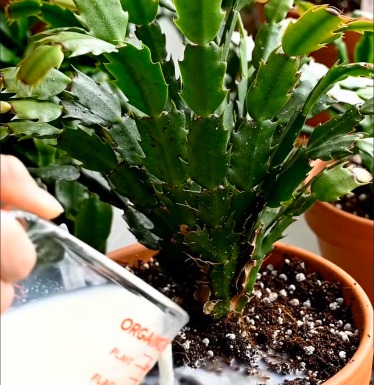
One popular homemade trick is feeding Christmas cactus with diluted milk. Milk contains calcium and other nutrients, but there isn’t strong extension guidance showing that milk is a superior fertilizer or that it directly prevents flower-bud drop. For reliable results, focus first on proven Christmas cactus care practices and use a properly formulated houseplant fertilizer during active growth.
Why Isn’t My Christmas Cactus Blooming?
If your Christmas cactus is producing plenty of green growth but few flowers, look at its light and temperature conditions first.
Holiday cacti are short-day plants. As autumn approaches, longer periods of darkness help trigger flower-bud formation. Artificial light from lamps, televisions, or other sources during the night can interfere with this process.
For a better chance of flowering:
- Give the plant bright, indirect light during the day.
- Provide long, uninterrupted periods of darkness in autumn.
- Keep nighttime temperatures relatively cool.
- Avoid moving the plant once flower buds have formed.
- Keep watering consistent without leaving the soil soggy.
- Protect the plant from drafts and sudden temperature changes.
These simple environmental adjustments can make a much bigger difference than adding unusual ingredients to the soil.
Should You Use Milk on a Christmas Cactus?
You may have seen the suggestion to feed a Christmas cactus with diluted milk.
The original idea is based on the fact that milk contains calcium, proteins, and other nutrients. However, reputable extension recommendations for holiday cacti generally focus on balanced houseplant fertilizer rather than milk. The University of Minnesota, for example, recommends fertilizing holiday cacti with a balanced houseplant fertilizer at half strength during active growth.
So, if you’re wondering “Is milk good for Christmas cactus?”, the safest answer is that it shouldn’t replace a proper fertilizer program.
If you still experiment with a very diluted milk solution, use only a small amount and avoid applying milk frequently. Never pour undiluted milk into the pot. Organic residues can create unpleasant odors and may encourage unwanted microorganisms or pests.
For consistent long-term care, a properly diluted houseplant fertilizer is the more predictable option.
The Best Fertilizer for Christmas Cactus
Christmas cactus doesn’t need heavy feeding.
During active growth, extension recommendations commonly suggest regular applications of a balanced houseplant fertilizer. The University of Minnesota recommends monthly feeding from June through August at half strength.
Another extension source recommends fertilizing every month or every two months depending on how actively the plant is growing, while cautioning that excessive fertilizer salts can damage the roots.
A simple approach is:
- Feed during active growth.
- Dilute fertilizer according to the product instructions, or use the reduced strength recommended for your plant.
- Avoid overfertilizing.
- Reduce or stop feeding around the flowering/rest period.
- Resume regular feeding when active growth begins again.
How to Prevent Christmas Cactus Bud Drop
One of the most frustrating Christmas cactus problems is flower-bud drop.
You may see dozens of beautiful buds developing, only to find them scattered underneath the plant a few days later.
This doesn’t necessarily mean the plant needs more fertilizer.
According to university extension sources, bud drop can be caused by sudden temperature changes, drafts, inappropriate watering, inadequate light, low humidity, or moving the plant after buds have formed.
1. Don’t Move the Plant Once It Has Buds
This is one of the easiest mistakes to make.
You may move your cactus from its growing location to a more attractive spot when it begins budding. Unfortunately, the sudden change in conditions can cause buds to drop.
Once the buds begin developing, try to keep the plant in a stable environment.
2. Keep It Away From Heat Sources
Don’t place your Christmas cactus directly beside:
- Radiators
- Heating vents
- Fireplaces
- Space heaters
- Hot appliances
Sudden temperature changes can cause flower buds to fall.
3. Avoid Letting the Soil Become Completely Dry
Although Christmas cactus is technically a cactus, it doesn’t behave like a typical desert cactus.
It prefers more moisture than many desert species.
Allow the surface of the potting mix to dry somewhat between waterings, but don’t allow the plant to become severely dehydrated. During budding and flowering, consistent moisture is especially important.
4. Don’t Keep the Roots Soggy
Overwatering can be just as damaging as underwatering.
Christmas cactus needs an airy, well-draining potting mixture. Constantly wet soil can contribute to root and stem rot.
Always use a container with drainage holes.
The Best Soil for Christmas Cactus
Because holiday cacti naturally grow as epiphytes, they benefit from an airy, fast-draining growing medium.
A heavy soil that stays wet for long periods can cause problems.
A suitable mixture can contain:
- Quality potting soil
- Perlite
- Peat moss or another moisture-retentive organic component
North Carolina State University recommends an airy, well-drained medium containing materials such as peat moss, sand, and perlite.
The goal is simple: the roots should have access to moisture without sitting in waterlogged soil.
How Much Light Does a Christmas Cactus Need?
Christmas cactus prefers bright, indirect light.
A bright window can work very well, but intense direct sunlight can damage or bleach the stems.
During the flowering period, filtered light helps keep the flowers looking their best.
Avoid constantly moving the plant between dramatically different lighting conditions.
The Secret to Getting Christmas Cactus to Flower
If your main goal is flowers, the most important trick isn’t milk—it’s giving the plant the right autumn conditions.
Holiday cacti respond to shorter days and cooler nighttime temperatures.
Several extension sources recommend providing long periods of uninterrupted darkness in the fall. Depending on the species and growing conditions, approximately 12–13 hours or more of darkness can help initiate flowering.
A simple flowering routine
Starting in early fall:
Daytime:
Give your cactus bright, indirect light.
Nighttime:
Place it somewhere that remains dark and isn’t exposed to household lights.
Temperature:
Keep nights relatively cool, avoiding sudden temperature changes.
Water:
Don’t allow the plant to become completely dry, but avoid constantly wet soil.
Location:
Once buds begin forming, leave the plant in a stable location.
With the right conditions, flower buds can develop naturally.
How Often Should You Water Christmas Cactus?
There isn’t one watering schedule that works for every home.
Temperature, humidity, pot size, soil composition, and light exposure all affect how quickly the soil dries.
Instead of watering on a fixed calendar, check the soil.
When the upper portion of the potting mix has dried, water thoroughly and allow excess water to drain away.
University of Florida guidance similarly recommends watering when the potting medium begins to dry while avoiding excessive moisture.
A pot sitting in standing water is a recipe for root problems.
Does Christmas Cactus Like Humidity?
Yes.
Unlike desert cacti, holiday cacti come from humid rainforest environments.
Moderate humidity can therefore be beneficial, particularly in homes where winter heating makes the air very dry.
If your home’s air is extremely dry, consider increasing humidity around the plant while still maintaining good air circulation.
Should You Repot Christmas Cactus?
Usually, there is no need to repot frequently.
Holiday cacti can actually flower well when somewhat pot-bound. Illinois Extension recommends repotting approximately every three years and doing it in spring.
Choose a container with drainage holes and avoid moving the plant into a dramatically oversized pot.
A huge pot can retain more moisture than the roots can use.
Christmas Cactus vs. Thanksgiving Cactus
Many people call every holiday cactus a Christmas cactus, but there are differences.
Thanksgiving cactus generally has more pointed or claw-like edges on its stem segments, while the true Christmas cactus has more rounded segment margins.
Both are members of the Schlumbergera group and have very similar basic care requirements.
So if your plant blooms around Thanksgiving instead of Christmas, don’t automatically assume something is wrong.
Can You Make Christmas Cactus Bushier?
Yes.
Pruning or pinching can encourage branching and create a fuller-looking plant.
University of Florida guidance notes that pruning encourages branching and flowering, and the removed sections can also be used for propagation.
The easiest time to prune is after flowering and during the appropriate active-growth period.
Simply remove a few terminal segments rather than cutting the plant aggressively.
How to Propagate Christmas Cactus
Christmas cactus is remarkably easy to propagate from stem cuttings.
Step 1: Choose a healthy segment
Select a healthy stem containing a few connected segments.
Step 2: Remove the cutting
Gently twist or cut the segment from the parent plant.
Step 3: Allow the cutting to dry
Let the cut end callus for a short period.
Step 4: Plant it
Place the cutting into a well-draining growing medium.
Step 5: Provide suitable conditions
Keep it in bright, indirect light and provide moderate moisture without saturating the soil.
With patience, roots will develop and the cutting can grow into a new plant.
Common Christmas Cactus Problems
Wrinkled or limp stems
Possible causes include improper watering or root problems.
Check the soil before adding more water.
Yellowing stems
Excessive moisture and poor drainage can contribute to root problems.
Buds falling
Check for:
- Sudden temperature changes
- Drafts
- Heat sources
- Insufficient light
- Overwatering
- Underwatering
- Low humidity
- Moving the plant
These are all documented causes associated with holiday cactus bud drop.
No flowers
Check whether the plant receives enough uninterrupted darkness at night and whether nighttime temperatures are suitable for flowering.
Artificial light in the evening can interfere with flower initiation.
Mushy stems
This can indicate excessive moisture or root/stem rot.
Check drainage immediately and allow the growing medium to dry appropriately.
A Simple Christmas Cactus Care Routine
If you want a simple routine rather than complicated plant hacks, follow this checklist:
Spring:
Resume active watering and feeding as new growth develops.
Summer:
Provide bright, indirect light, moderate moisture, and regular feeding during active growth.
Early fall:
Begin preparing the plant for flowering with appropriate darkness and cooler nights.
When buds appear:
Keep the plant stable. Avoid moving it, exposing it to drafts, or dramatically changing its watering routine.
During flowering:
Provide bright indirect light and consistent moisture without waterlogging the soil.
After flowering:
Reduce watering somewhat and allow the plant to rest before active growth resumes.
Frequently Asked Questions
Can I use milk as fertilizer for Christmas cactus?
Milk contains nutrients such as calcium, but it is not a standard recommended fertilizer for Christmas cactus. For predictable nutrition, use a balanced houseplant fertilizer according to its label directions.
How do I get my Christmas cactus to bloom more?
Give it bright indirect light during the day, long uninterrupted darkness at night during the appropriate autumn period, suitable cool nighttime temperatures, and consistent watering.
Why are the buds falling off my Christmas cactus?
Bud drop can result from sudden temperature changes, drafts, changes in light, improper watering, low humidity, or moving the plant while buds are developing.
Should I water Christmas cactus while it is blooming?
Yes, but avoid both extremes. The soil should not become bone dry, while constantly saturated soil can cause root problems.
Does Christmas cactus need direct sunlight?
It prefers bright, filtered or indirect light. Excessive direct sun can damage or bleach the stems.
How often should I fertilize Christmas cactus?
During active growth, monthly feeding at reduced strength is one approach recommended by extension guidance. Follow the fertilizer label and avoid excessive applications because fertilizer salts can damage roots.
Can Christmas cactus live for many years?
Absolutely. Holiday cacti can be remarkably long-lived. Penn State Extension notes that some properly cared-for plants can live for more than 100 years.
Final Thoughts
The secret to a beautiful, heavily blooming Christmas cactus isn’t necessarily an unusual homemade fertilizer.
The biggest difference comes from consistent Christmas cactus care.
Give your plant bright indirect light, an airy well-draining soil mix, appropriate moisture, moderate humidity, suitable temperatures, and long uninterrupted nights when you’re preparing it for flowering.
And if you’re trying the popular diluted-milk trick, treat it as a homemade experiment rather than a proven replacement for fertilizer. The evidence-based approach is to provide the plant with the environmental conditions it naturally needs and use a suitable houseplant fertilizer during active growth.
With the right care, your Christmas cactus can become a long-lived houseplant that rewards you with spectacular blooms year after year.