
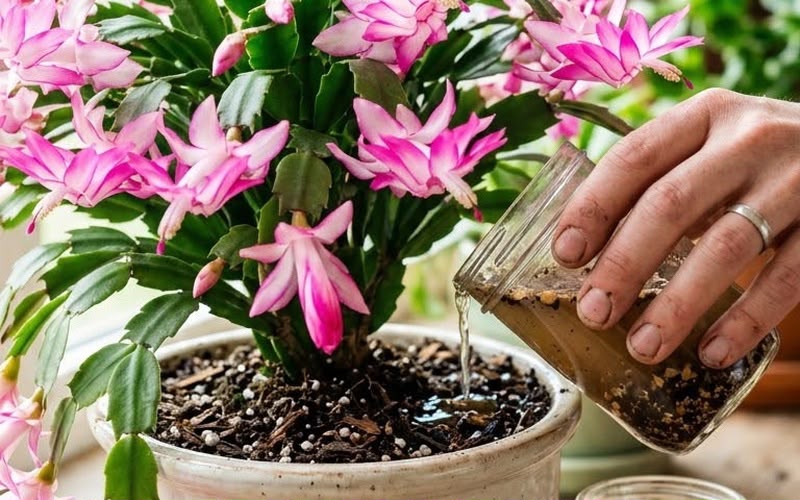
Is your Christmas cactus looking weak, growing slowly, or refusing to produce those beautiful holiday blooms? Before reaching for a strong commercial fertilizer, you can try a simple homemade plant treatment using ingredients you may already have at home.
This natural Christmas cactus recipe combines used, completely dried coffee grounds and finely crushed eggshells with water. Used sparingly, it can be part of a gentle plant-care routine. However, the real secret to getting a Christmas cactus to bloom isn’t a single homemade fertilizer. Light, watering, soil drainage, temperature, and long, cool nights in fall all play a much bigger role.
If you’re looking for a simple way to support your Christmas cactus while also learning how to encourage more flowers, here’s exactly what to do.
Can This Natural Mixture Help a Christmas Cactus?
Coffee grounds and eggshells are popular ingredients in homemade gardening recipes because they contain nutrients and organic material. However, they should not be treated as a guaranteed fertilizer or blooming solution.
Coffee grounds are not a complete fertilizer, and eggshells release calcium slowly. A homemade mixture like this should therefore be viewed as a gentle supplement rather than a replacement for proper Christmas cactus care.
The most important thing is moderation. Using too much of any homemade fertilizer or amendment can potentially disturb the growing medium or contribute to root problems.
For a healthy Christmas cactus, focus first on the basics: bright indirect light, excellent drainage, appropriate watering, and the seasonal conditions that encourage flowering.
Natural Christmas Cactus Recipe
Ingredients
- 1 liter of water
- 1 teaspoon of used, completely dried coffee grounds
- 1 teaspoon of finely crushed eggshells
Why These Ingredients Are Used
Coffee grounds: Used coffee grounds contain small amounts of nutrients and organic material. Because they aren’t a balanced fertilizer, use them sparingly rather than relying on them as the primary source of plant nutrition.
Eggshells: Eggshells are primarily a source of calcium carbonate. Finely crushing them increases their surface area, although they break down relatively slowly.
Water: Water allows the ingredients to soak before the mixture is strained and used.
How to Make the Homemade Christmas Cactus Treatment
Step 1: Prepare the Coffee Grounds
Make sure the coffee grounds are used and completely dry. Avoid using fresh coffee grounds directly in this recipe.
Allow them to dry thoroughly before measuring.
Step 2: Crush the Eggshells
Wash the eggshells thoroughly and allow them to dry completely.
Crush them as finely as possible. A fine texture allows more surface area to come into contact with the water and soil.
Step 3: Combine the Ingredients
Add 1 teaspoon of dried used coffee grounds and 1 teaspoon of finely crushed eggshells to 1 liter of water.
Stir the mixture well.
Step 4: Let It Sit
Allow the mixture to sit for approximately 12 to 24 hours.
This gives the ingredients time to soak in the water.
Step 5: Strain Thoroughly
Strain the mixture carefully before using it.
This is especially important for a Christmas cactus because you don’t want large pieces of coffee grounds or eggshells accumulating around the roots.
Step 6: Water Lightly
Use the strained water to lightly water your Christmas cactus.
Only water when the top layer of the potting mix has dried. Don’t leave the plant sitting in excess water.
How Often Should You Use It?
Don’t use this homemade mixture every time you water.
Natural fertilizer treatments should be used sparingly, especially with container plants. Too much organic material or fertilizer can contribute to soil imbalance and may cause problems for the roots.
For most Christmas cacti, proper watering habits are far more important than frequent homemade fertilizer treatments.
If your plant is already healthy and growing well, there may be little reason to repeatedly apply this mixture.
The Real Secret to Getting a Christmas Cactus to Bloom
If your Christmas cactus isn’t blooming, the problem may have nothing to do with fertilizer.
Christmas cactus flowering is strongly influenced by light and temperature conditions, particularly during the weeks leading up to its normal flowering period.
1. Give It Bright, Indirect Light
Christmas cactus generally does best with bright, indirect light.
A location near a bright window can work well, but intense direct sunlight can be too harsh, particularly during the hottest part of the day.
If the plant isn’t receiving enough light, growth may become weak and flowering can be limited.
2. Avoid Overwatering
Overwatering is one of the most common problems with Christmas cactus care.
Although Christmas cactus is technically a cactus, it comes from a very different environment than desert cacti. It prefers a more moisture-retentive environment than many desert cactus species, but it still needs excellent drainage.
Allow the upper portion of the soil to dry before watering again.
Always make sure the container has drainage holes.
3. Use Well-Draining Soil
A Christmas cactus needs a growing medium that drains efficiently.
Poor drainage can keep the roots wet for too long and increase the risk of root problems.
A quality potting mix designed for cacti or other well-draining houseplants can be a good starting point.
4. Give It Cooler, Longer Nights in Fall
One of the most important factors for Christmas cactus flowering is the seasonal change in night length and temperature.
As fall approaches, longer uninterrupted periods of darkness and cooler nighttime temperatures can help encourage the formation of flower buds.
This is why a Christmas cactus that receives the right seasonal conditions may naturally begin preparing to bloom as the holidays approach.
5. Don’t Keep Moving the Plant
Once your Christmas cactus begins producing flower buds, try to avoid frequently moving or disturbing it.
Sudden changes in light, temperature, watering, or location can sometimes contribute to bud drop.
A stable environment is especially helpful when the plant is preparing to flower.
Should You Put Coffee Grounds Directly on a Christmas Cactus?
It’s better to avoid simply piling coffee grounds on top of the potting soil.
Coffee grounds can retain moisture, and a thick layer may interfere with the growing medium’s surface conditions.
If you want to experiment with a homemade treatment, using a small, strained amount is a more controlled approach than repeatedly adding large quantities of grounds to the pot.
Remember that coffee grounds aren’t a complete plant fertilizer.
What About Eggshells for Christmas Cactus?
Eggshells are commonly used in gardening as a calcium source because they’re largely composed of calcium carbonate.
However, eggshells don’t provide an instant source of plant nutrition. They break down relatively slowly, especially when pieces are large.
If you use eggshells, finely crushing them is preferable to adding large pieces.
Most importantly, don’t assume that adding more eggshells will result in more flowers.
Can Baking Soda Make a Christmas Cactus Bloom?
You’ll find many homemade plant-care recipes online recommending baking soda for flowering plants.
However, baking soda isn’t a guaranteed Christmas cactus blooming treatment.
Adding unnecessary baking soda can also affect the growing medium’s chemistry. There’s no reason to routinely add it simply because a plant isn’t flowering.
Instead, concentrate on the factors that actually matter most:
- Bright, indirect light
- Appropriate watering
- Well-draining soil
- Good drainage
- Cooler fall temperatures
- Longer, uninterrupted nighttime darkness
- Stable conditions while flower buds develop
Why Is My Christmas Cactus Not Blooming?
There are several possible reasons your Christmas cactus isn’t flowering.
Too Much Light at Night
Artificial light during the evening can interfere with the long, dark nights that help Christmas cactus initiate flowering.
If your plant is near a bright lamp, television, or other light source, consider moving it somewhere where it receives uninterrupted darkness at night during the fall.
Too Warm at Night
Warm nighttime conditions may make it harder for the plant to receive the seasonal cues associated with flowering.
A slightly cooler environment during the fall can help encourage bud formation.
Incorrect Watering
Both excessive watering and prolonged dryness can stress the plant.
Instead of following a rigid calendar, check the soil and water according to its moisture level and the plant’s growing conditions.
Poor Drainage
If water remains trapped around the roots, the plant can develop serious problems.
Make sure the pot has drainage holes and that excess water can escape freely.
Insufficient Light
A Christmas cactus needs adequate light to maintain healthy growth and prepare for flowering.
A very dark location may result in weak growth and fewer flowers.
How to Care for a Christmas Cactus After It Blooms
Once your Christmas cactus has finished flowering, continue providing good basic care.
Place it in bright, indirect light and continue monitoring the soil before watering.
Don’t dramatically increase watering simply because the plant has finished blooming.
You can also prune or shape the plant after flowering if necessary. Removing a few segments can encourage branching and help create a fuller-looking plant.
Can You Fertilize a Christmas Cactus?
Yes, Christmas cactus can benefit from appropriate fertilization during periods of active growth.
However, fertilizer should be used according to the plant’s growth stage and the product’s instructions.
A balanced houseplant fertilizer can provide more predictable nutrition than homemade mixtures because its nutrient content is known.
If you choose to experiment with natural ingredients such as coffee grounds and eggshells, think of them as an occasional supplement rather than a complete fertilizer program.
Common Christmas Cactus Care Mistakes
Mistake #1: Watering on a Strict Schedule
Your plant doesn’t necessarily need water every seven days.
Indoor temperature, humidity, pot size, soil composition, season, and light levels all influence how quickly the soil dries.
Check the soil instead.
Mistake #2: Using Too Much Homemade Fertilizer
More isn’t better.
Overfertilizing can damage roots and create an unhealthy growing environment.
Mistake #3: Keeping the Soil Constantly Wet
Christmas cactus needs moisture, but it doesn’t want to sit in waterlogged soil.
Good drainage is essential.
Mistake #4: Expecting a Homemade Recipe to Cause Instant Blooms
No homemade fertilizer can replace the plant’s basic environmental requirements.
If your Christmas cactus isn’t blooming, examine its light, nighttime darkness, temperature, watering, and drainage before adding more fertilizer.
Mistake #5: Using Baking Soda as a Bloom Booster
Baking soda isn’t a guaranteed flowering treatment.
There are better ways to encourage your Christmas cactus to bloom, particularly by providing appropriate fall conditions.
Frequently Asked Questions
What is the best natural fertilizer for Christmas cactus?
There isn’t one homemade ingredient that can guarantee better growth or more flowers. Coffee grounds and eggshells can be used sparingly, but a properly formulated houseplant fertilizer provides more predictable nutrition.
How do I get my Christmas cactus to bloom?
Give it bright, indirect light during the day and provide cooler temperatures and longer, uninterrupted periods of darkness during the fall. Avoid overwatering and keep the plant in well-draining soil.
Are coffee grounds good for Christmas cactus?
Used coffee grounds contain some nutrients and organic material, but they aren’t a complete fertilizer. If you use them, do so sparingly and avoid piling large amounts directly around the plant.
Are eggshells good for Christmas cactus?
Eggshells are primarily made of calcium carbonate and can contribute calcium as they break down. However, they break down slowly and shouldn’t be considered an instant flowering treatment.
How often should I water my Christmas cactus?
Water when the upper portion of the potting mix has dried rather than watering according to a fixed schedule. The exact frequency depends on your home’s temperature, humidity, light, pot size, and soil.
Why does my Christmas cactus have lots of leaves but no flowers?
A Christmas cactus can grow healthy foliage without flowering if its seasonal flowering cues aren’t right. Insufficient darkness at night, warm conditions, inadequate light, or other environmental factors may affect bud formation.
Can I use baking soda to make my Christmas cactus bloom?
Baking soda isn’t a guaranteed blooming treatment and isn’t necessary for routine Christmas cactus care.
Final Thoughts
A simple mixture of used dried coffee grounds, finely crushed eggshells, and water can be an interesting homemade addition to your Christmas cactus care routine when used sparingly.
But don’t let the recipe distract you from what matters most.
If you want your Christmas cactus to grow vigorously and produce beautiful seasonal flowers, focus on the fundamentals: bright indirect light, well-draining soil, careful watering, good drainage, cooler fall conditions, and long uninterrupted nights.
Healthy roots and the right seasonal environment are much more important than any single homemade fertilizer recipe.
So before adding another treatment to your plant, check the basics first. Sometimes the simplest changes—better light, less frequent watering, or a more suitable location—can make the biggest difference.
Quick Christmas Cactus Care Checklist
- ✔️ Bright, indirect light
- ✔️ Well-draining potting mix
- ✔️ Pot with drainage holes
- ✔️ Water when the upper soil dries
- ✔️ Avoid waterlogged roots
- ✔️ Provide cooler, longer nights in fall
- ✔️ Keep nighttime darkness uninterrupted
- ✔️ Use fertilizer sparingly
- ✔️ Don’t rely on baking soda for flowering
- ✔️ Avoid excessive homemade treatments
With consistent care and the right seasonal conditions, your Christmas cactus can reward you with beautiful flowers year after year.