
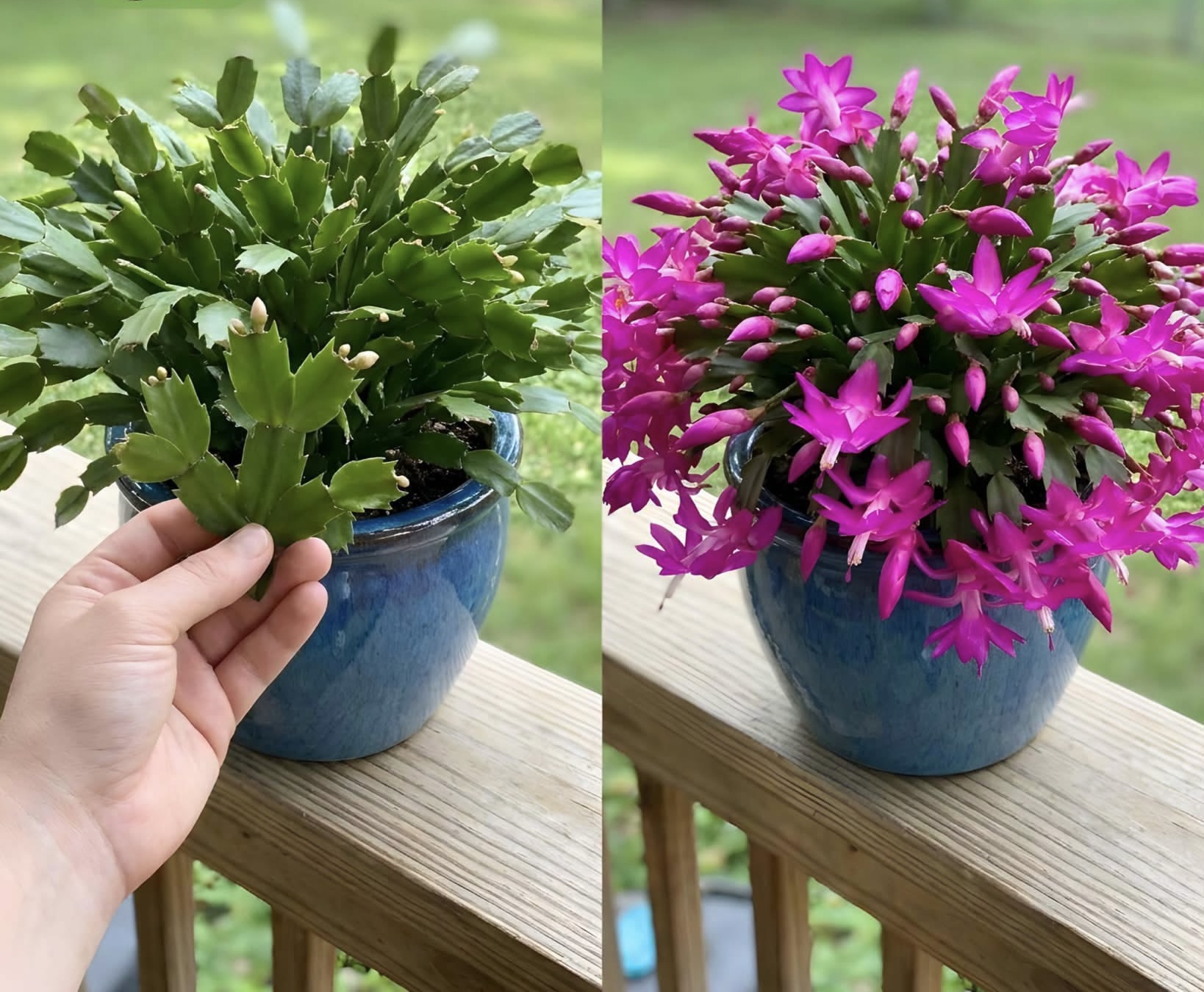
Have you ever watched your Thanksgiving cactus produce a beautiful display of pink, red, white, or purple flowers, only to see every bloom fade a few weeks later?
Don’t worry. That doesn’t mean your plant is finished flowering for good.
A healthy Thanksgiving cactus can bloom again when it receives the right combination of light, darkness, temperature, and care. However, another flush of flowers may require a recovery period and a fresh flowering cycle rather than an immediate second bloom.
The secret is understanding what triggers flower formation.
Thanksgiving cactus is a short-day plant, meaning its flowering responds to seasonal changes in day length and temperature. Providing sufficiently long, uninterrupted nights and cooler temperatures can encourage it to produce new flower buds. University extension guidance confirms that these conditions are important for holiday cactus reblooming.
Here’s how to care for your Thanksgiving cactus after flowering and encourage another spectacular display.
Can a Thanksgiving Cactus Bloom More Than Once?
Yes, a healthy Thanksgiving cactus can flower again.
However, there is an important distinction between keeping flowers open for longer and encouraging a completely new round of blooms.
Individual flowers eventually fade naturally. A second flush of flowers requires the plant to produce additional buds, which depends on its health, growing conditions, and flowering response.
Thanksgiving cactus generally blooms in response to shorter days and cooler temperatures. Under suitable conditions, it may develop buds after several weeks of the appropriate environmental signals.
According to Iowa State University Extension, most holiday cactus cultivars need approximately 14–16 hours of uninterrupted darkness to initiate flower buds, although some cultivars can respond to shorter dark periods. Cooler temperatures can also help trigger flowering.
This means you cannot guarantee a second bloom simply by watering more or applying extra fertilizer.
Instead, concentrate on creating the conditions the plant needs.
1. Let Your Thanksgiving Cactus Rest After Flowering
When the flowers fade, your first instinct might be to give the plant more fertilizer or immediately try to force another round of blooms.
Resist that temptation.
Your Thanksgiving cactus needs time to recover from flowering.
Start by removing faded flowers gently. You can also remove any damaged or unhealthy stem segments.
Place the plant in a bright location with indirect sunlight and continue providing normal houseplant care.
For a short period after flowering, reduce watering slightly. Do not allow the root ball to become completely dry for extended periods, but avoid keeping the soil constantly wet.
The University of Connecticut Extension recommends reducing watering slightly after holiday cacti finish flowering until new growth appears. Regular watering and fertilizing can resume as growth begins.
What about fertilizer?
Do not try to force a second bloom with a large dose of fertilizer.
Wait until the plant resumes active growth before returning to a regular feeding routine.
A healthy plant with functioning roots is better prepared for future flowering than one stressed by excessive fertilizer or inconsistent watering.
2. Give It 12–14 Hours of Darkness Each Night
One of the most important steps in encouraging another flowering cycle is providing a sufficiently long, uninterrupted night.
Thanksgiving cactus responds to seasonal changes in day length.
For many plants, approximately 12–14 hours of uninterrupted darkness each night for several weeks is a useful starting point.
Some cultivars may require longer nights, so individual plants can respond differently.
How to provide the darkness it needs
Try this simple routine:
- Give your plant bright, indirect light during the day.
- Place it in a naturally dark room at night.
- Keep it away from lamps, televisions, and other bright artificial lights.
- Repeat the routine consistently for several weeks.
- Watch for tiny flower buds forming at the ends of the stem segments.
An unused bedroom or another room that stays dark at night can be useful.
If you cover the plant to block light, make sure the covering doesn’t crush the stems or trap excessive heat.
Should you keep it in darkness all day?
No.
Your Thanksgiving cactus still needs light for healthy growth.
The goal is bright, indirect daytime light followed by a long, uninterrupted period of darkness.
Keeping the plant in darkness around the clock is not the correct approach.
3. Keep Nighttime Temperatures Cool
Light isn’t the only signal that encourages flowering.
Temperature also plays an important role.
Holiday cacti often produce flower buds more reliably when nighttime temperatures are cooler.
A useful target during bud initiation is approximately 55–65°F (13–18°C), although the ideal conditions vary by cultivar and growing environment.
Iowa State University Extension explains that temperatures above 70°F can prevent flowering in many holiday cactus cultivars, even when short-day conditions are provided.
Where should you place the plant?
Look for a location that stays comfortably cool at night without exposing the plant to freezing temperatures.
A bright spare room may work well.
Avoid placing the cactus directly against a cold window or next to an exterior door where temperatures fluctuate sharply.
Also keep it away from heating vents and other sources of sudden temperature changes.
The objective is a cool, stable environment, not extreme cold.
4. Water Carefully After the Flowers Fade
Watering can make the difference between a healthy Thanksgiving cactus and one struggling with root problems.
Although it belongs to the cactus family, Thanksgiving cactus naturally grows in a very different environment from desert cacti.
It prefers an airy growing medium and consistent but moderate moisture.
After flowering, you can reduce watering slightly while the plant rests. As new growth develops, return to regular watering.
How to know when to water
Check the upper portion of the potting mix.
If it has dried somewhat, water thoroughly and let the excess drain away.
Avoid both extremes:
- Keeping the soil constantly soggy
- Allowing the entire root ball to become severely dehydrated
Overwatering can damage the roots, making it difficult for the plant to absorb the moisture it needs.
The University of Vermont Extension recommends well-draining soil and allowing the soil to dry between waterings to reduce the risk of stem and root rot.
Does the plant need less water during bud formation?
Water requirements depend on the environment, pot size, growing medium, and plant activity.
During bud development, consistency is important.
Check the soil regularly and avoid letting the plant swing between soaking wet and extremely dry conditions.
5. Give It Bright, Indirect Daylight
A long night is essential, but your Thanksgiving cactus still needs appropriate daytime light.
Place it near a bright window where it receives filtered sunlight.
Avoid harsh direct sunlight that can scorch or discolor the flattened stem segments.
If the plant spent the summer outdoors, gradually acclimate it when moving it indoors to prevent sudden environmental stress.
Bright, indirect light supports healthy growth while the plant prepares for its next flowering cycle.
6. Avoid Excessive Fertilizer
It can be tempting to feed your plant more often when you want additional flowers.
Unfortunately, fertilizer cannot replace the environmental signals needed to trigger flowering.
During active growth, a balanced houseplant fertilizer used according to its label can help maintain plant health.
Spring and summer are generally the main growing and feeding periods for holiday cacti.
After flowering, reduce feeding while the plant rests. Resume an appropriate feeding schedule when active growth begins.
Avoid excessive nitrogen or applying concentrated fertilizer to dry roots.
Too much fertilizer can damage roots and encourage unnecessary leafy growth without guaranteeing more flowers.
7. Don’t Repot It Just to Encourage More Blooms
Repotting immediately after flowering is usually unnecessary unless the plant has a specific problem.
Holiday cacti often grow and flower well when their roots fit snugly in the pot.
Repotting can disturb the root system and introduce additional stress.
If your plant is healthy, the pot drains properly, and the growing medium is suitable, leave it alone until repotting is genuinely needed.
When repotting is necessary, use a well-draining medium and a pot with drainage holes.
Avoid moving the plant into a dramatically oversized container.
8. Once Buds Appear, Keep Conditions Stable
Seeing the first tiny flower buds is exciting.
It’s also the time to avoid unnecessary changes.
Thanksgiving cactus buds can drop when the plant experiences stress from sudden changes in temperature, light, or watering.
Once buds form:
- Keep the plant in a stable location.
- Maintain bright, indirect daytime light.
- Avoid cold drafts and heating vents.
- Water consistently without leaving the pot soggy.
- Avoid unnecessary repotting.
- Don’t repeatedly move the plant to different rooms.
If you want to display the cactus somewhere else, wait until the flowers begin opening and make the move as gently as possible.
9. Understand Why Your Thanksgiving Cactus Isn’t Reblooming
If your plant produces healthy green stems but refuses to flower again, several factors may be responsible.
The nights aren’t dark enough
Artificial light can interfere with the dark period the plant needs.
Try moving it to a room that remains naturally dark at night.
The nighttime temperature is too warm
Warm nights can prevent some cultivars from initiating flower buds.
Try a cooler location that remains safely above damaging temperatures.
The soil stays too wet
Constantly wet soil can damage the roots and weaken the plant.
Check the drainage holes and make sure the growing medium allows excess water to escape.
The plant is too dry
Allowing the root ball to become extremely dry can also stress the plant.
Check moisture regularly and water when appropriate.
The plant is receiving too much fertilizer
Heavy feeding won’t force flowering.
Return to a balanced feeding routine during active growth rather than applying extra fertilizer in an attempt to produce buds.
The plant has recently been moved or repotted
Sudden changes in the environment can stress the plant.
Give it time to settle into stable growing conditions.
The plant needs more recovery time
Not every healthy Thanksgiving cactus will produce another flush of flowers immediately after its first display.
Be patient and focus on maintaining healthy growth before attempting another flowering cycle.
10. How Long Does It Take for New Buds to Appear?
There is no exact timeline for every Thanksgiving cactus.
Under suitable short-day conditions, flower buds may begin appearing after several weeks.
University extension recommendations commonly describe approximately 4–8 weeks for holiday cactus buds to develop under appropriate flowering conditions, although cultivars and growing environments vary.
If you provide 12–14 hours of uninterrupted darkness each night and suitable cool temperatures, monitor the ends of the stem segments for tiny buds.
Don’t expect the plant to transform overnight.
Once the buds appear, allow them time to develop naturally.
11. Thanksgiving Cactus vs. Christmas Cactus
Before adjusting your care routine, it helps to know which holiday cactus you own.
These plants are closely related, but they do not always flower at the same time.
Thanksgiving cactus
Thanksgiving cactus, Schlumbergera truncata, typically has pointed, claw-like projections along the edges of its flattened stem segments.
It commonly flowers around late fall.
Christmas cactus
True Christmas cactus, Schlumbergera × buckleyi, has more rounded, scalloped segment edges.
Its natural flowering period generally occurs later.
Both plants respond to changes in day length and temperature, but the exact timing can vary by cultivar and growing conditions.
This distinction may explain why one plant flowers earlier than another, even when both receive similar care.
12. A Simple Routine for Encouraging Another Bloom
If you prefer a straightforward approach, use this routine.
After the first flowering
Remove faded flowers and allow the plant to rest briefly.
Reduce watering slightly while maintaining healthy roots and suitable light.
During active growth
Provide bright, indirect light, water appropriately, and use a balanced fertilizer according to its label.
When preparing for another flowering cycle
Provide approximately 12–14 hours of uninterrupted darkness each night and cool nighttime temperatures for several weeks.
Remember that some cultivars may need longer dark periods.
When buds appear
Keep the plant in a stable environment and avoid sudden changes.
When flowers open
Enjoy the display and continue providing suitable light and moisture.
Once the flowers fade, repeat the appropriate recovery and growing routine.
Frequently Asked Questions
Can a Thanksgiving cactus bloom twice in one year?
It is possible for a healthy Thanksgiving cactus to flower more than once, but a second flush is not guaranteed immediately after the first. Another flowering cycle depends on the plant’s condition, cultivar, and environmental signals.
How do I make my Thanksgiving cactus bloom again?
Provide a recovery period after flowering, maintain healthy growth, then encourage another flowering cycle with long, uninterrupted nights and suitable cool temperatures.
How many hours of darkness does a Thanksgiving cactus need?
Approximately 12–14 hours of uninterrupted darkness is a useful starting point. Some cultivars need longer periods, so individual plants may respond differently.
Should I water my Thanksgiving cactus after it blooms?
Yes, but you can reduce watering slightly during its post-flowering rest. Resume regular watering as new growth appears, allowing the upper layer of potting mix to dry somewhat between waterings.
Should I fertilize a Thanksgiving cactus after flowering?
Avoid heavy feeding during its rest period. Resume balanced fertilization when active growth begins, following the fertilizer label.
Why are the buds falling off my Thanksgiving cactus?
Possible causes include sudden temperature changes, drafts, inconsistent watering, excessively wet soil, or abrupt changes in light.
Can I put my Thanksgiving cactus in a dark closet?
A dark room can help provide uninterrupted nighttime darkness, but the plant still needs bright, indirect light during the day.
Does a Thanksgiving cactus need direct sunlight?
No. Bright, indirect light is generally preferable. Harsh direct sunlight can damage its stems.
Final Thoughts
Your Thanksgiving cactus doesn’t have to be a one-time flowering plant.
With suitable care, a healthy plant can reward you with another beautiful display, although the timing and number of flowering cycles vary.
Start by allowing it to recover after flowering. Maintain healthy roots, provide bright indirect light, and water carefully.
When you’re ready to encourage new buds, concentrate on the two biggest environmental signals: long, uninterrupted nights and cooler temperatures.
Once the buds appear, keep the conditions stable and give the plant time to do the rest.
You may soon find yourself enjoying another spectacular display of pink, red, white, or purple flowers.