
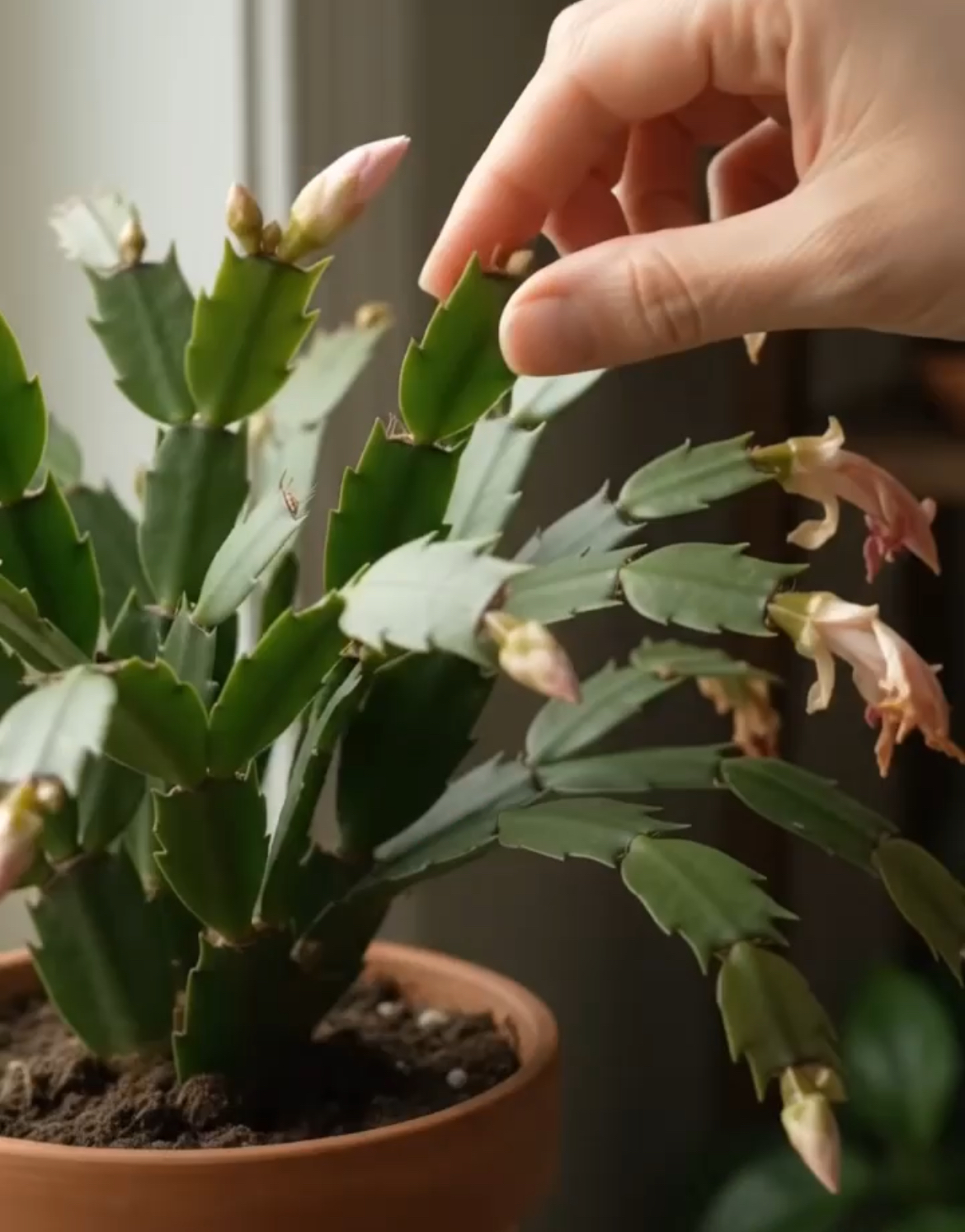
If your Christmas cactus is healthy, green, and growing beautifully but won’t bloom, you’re not alone. One of the most common questions gardeners ask is: “How do I get my Christmas cactus to flower?”
The good news is that a Christmas cactus usually doesn’t need a complicated fertilizer, special blooming product, or mysterious homemade remedy.
Flowering is strongly influenced by day length, uninterrupted darkness, temperature, light, watering, and the plant’s overall health. Holiday cacti are short-day plants, meaning shorter days and longer nights help trigger flower-bud formation.
If you want your Christmas cactus covered in colorful flowers around the holidays, the preparation needs to begin weeks before Christmas.
Here’s exactly what to do.
Why Isn’t My Christmas Cactus Blooming?
A Christmas cactus can look perfectly healthy and still refuse to flower.
That’s because flowering isn’t determined by plant health alone.
Christmas cactus responds to environmental signals, particularly long nights and cooler temperatures. University Extension sources explain that holiday cacti begin forming flower buds as day length decreases in fall.
The most common reasons a Christmas cactus doesn’t bloom include:
- Too much light at night
- Nights that are too warm
- Not enough bright daytime light
- Incorrect watering
- Moving the plant after buds form
- Starting the flowering routine too late
- Poor overall plant health
The solution is usually to correct the growing conditions rather than add a “miracle” ingredient.
7 Ways to Get Your Christmas Cactus to Bloom
1. Start Preparing in Early Fall
One of the biggest mistakes gardeners make is waiting until December to think about flowering.
If you want Christmas cactus flowers around the holidays, begin preparing the plant in late September or early October.
The article you provided recommends starting around this time because the plant generally needs several weeks of the right conditions to initiate buds.
University Extension guidance similarly indicates that Christmas and Thanksgiving cacti generally need around six weeks of short-day conditions to initiate flowering.
So don’t wait until you see everyone else’s Christmas cactus covered in flowers.
Start early.
2. Give Your Christmas Cactus Long, Uninterrupted Nights
This is one of the most important Christmas cactus blooming tricks.
Holiday cacti are short-day plants. As autumn approaches and nights become longer, these plants receive a natural signal that it’s time to begin producing flower buds.
For reliable indoor flowering, provide approximately 12–16 hours of uninterrupted darkness every night for several weeks, depending on the plant and growing conditions. Illinois Extension recommends at least 12 hours of continuous darkness for roughly 5–6 weeks, while Iowa State notes that many cultivars respond to 14–16 hours.
Why does uninterrupted darkness matter?
Artificial light can interrupt the plant’s nighttime signal.
A Christmas cactus sitting in a living room where lights remain on late into the evening may not receive the same uninterrupted darkness as a plant in a dark spare room.
For this reason, choose a location that naturally becomes dark at night.
A spare bedroom can work particularly well.
You can also use a consistent light-control routine if necessary.
Important:
The plant should not stay in darkness all day.
It still needs bright daytime light.
Think:
Bright days + long, uninterrupted nights.
3. Give It Bright, Indirect Light During the Day
Long nights are only part of the equation.
During the daytime, your Christmas cactus needs adequate light.
A bright location with indirect or filtered light is ideal. An east-facing window can be a good choice because it generally provides bright morning light without the intensity of strong afternoon sun.
The linked article also recommends bright indirect daytime light and warns against harsh afternoon sun.
University Extension guidance similarly recommends filtered light and warns that excessive sunlight can cause pale growth or sunburn.
Avoid:
- Very dark rooms
- Strong afternoon sunlight through glass
- Constantly changing the plant’s location
The goal is bright but gentle daytime light.
4. Give Your Christmas Cactus Cooler Nights
Temperature is another important flowering signal.
Christmas cactus generally benefits from cooler nighttime temperatures during bud formation.
A range around 55–65°F (13–18°C) is commonly recommended for encouraging flowering, although exact requirements vary by cultivar and conditions.
Iowa State Extension notes that temperatures above about 70°F can prevent flowering even when day length is appropriate, while some Christmas and Thanksgiving cacti can initiate flowering at around 55°F regardless of day length.
You don’t need to put your plant somewhere freezing.
Instead, look for a naturally cooler room or area of your home.
Avoid sudden temperature changes
Once buds appear, consistency becomes even more important.
Drafts, sudden temperature changes, and moving the plant can contribute to bud drop.
5. Water It Correctly
Despite the word “cactus” in its name, Christmas cactus isn’t a desert cactus.
It originates from humid forest environments, so its watering needs are different from those of many traditional desert cacti.
The trick is to avoid both extremes.
Don’t let it become bone dry.
But also:
Don’t keep it constantly soggy.
The linked article recommends watering when the top inch of soil feels dry and allowing excess water to drain completely.
University Extension guidance also stresses good drainage and warns that overly wet soil can cause root problems.
A simple watering routine
Check the top layer of soil with your finger.
If it’s beginning to dry, water thoroughly.
Then allow excess water to drain from the bottom of the container.
Never allow the pot to sit in standing water.
6. Once Flower Buds Appear, Don’t Move the Plant
This is one of the most frustrating parts of growing Christmas cactus.
You finally see tiny flower buds forming.
Then you decide to move the plant to a prettier location.
A few days later, the buds are falling off.
Sound familiar?
Christmas cactus can be sensitive to changes in temperature, light, drafts, and humidity while buds are developing. University of Minnesota Extension specifically warns that sudden changes can cause flower buds to drop.
So once your Christmas cactus begins producing buds:
Leave it where it is.
Avoid:
- Rotating the pot unnecessarily
- Moving it to another window
- Putting it beside a heater
- Exposing it to cold drafts
- Changing its lighting suddenly
- Letting it become severely dry
Give those tiny buds time to develop.
7. Prune Your Christmas Cactus After Flowering
Want a fuller Christmas cactus with more potential flowering points next year?
Pruning can help.
The best time for a light trim is after flowering, rather than during the period when you’re trying to initiate buds.
The Tiny Garden Habit article recommends removing one or two segments from the ends of longer stems to encourage branching.
University of Minnesota Extension also notes that pruning after flowering can encourage branching.
More branching can mean more stem tips where future flowers can develop.
How to prune
Simply pinch or carefully cut one or two segments from the end of longer stems.
Don’t remove huge portions of the plant.
A light trim is usually enough.
And here’s a bonus:
Save the healthy cuttings.
Christmas cactus is easy to propagate from stem segments, so those pieces can potentially become new plants.
How Long Does It Take for a Christmas Cactus to Bloom?
Don’t expect flower buds to appear overnight.
Once the appropriate fall conditions begin, it can take several weeks for flower buds to develop.
Around six weeks is a useful general target for many Christmas and Thanksgiving cacti under appropriate conditions.
That’s why timing matters so much.
If you begin the process in December, you may already be too late to get the exact flowering schedule you want.
How to Get a Christmas Cactus to Bloom for Christmas
If your goal is specifically Christmas blooms, timing becomes especially important.
A simple schedule looks like this:
Late September to early October
Begin providing longer uninterrupted nights and cooler nighttime conditions.
October
Maintain:
- Long, uninterrupted darkness
- Bright daytime light
- Cooler nights
- Consistent watering
November
Watch closely for developing flower buds.
Once buds appear, avoid moving the plant.
December
Enjoy the flowers!
The exact timing varies depending on cultivar and growing conditions, so don’t worry if your plant flowers slightly earlier or later.
Also remember that plants sold as “Christmas cactus” are sometimes actually Thanksgiving cactus or hybrids, which can naturally flower earlier. The linked article makes this point as well.
What If My Christmas Cactus Has Buds but They Keep Falling Off?
Bud drop can be incredibly frustrating.
The plant finally produces flower buds—and then suddenly they are all over the floor.
Possible causes include:
Sudden temperature changes
Moving the plant from a cool room to a warm room can stress developing buds.
Drafts
Keep the plant away from heating vents, fireplaces, frequently opened exterior doors, and cold drafts.
Sudden lighting changes
Once buds develop, maintain a stable lighting environment.
Incorrect watering
Both excessive dryness and overly wet conditions can cause problems.
Moving the plant
Try not to relocate it once buds have formed.
University of Minnesota Extension specifically notes that drafts and sudden changes in temperature or humidity can cause buds to drop.
Should You Put Christmas Cactus in a Closet to Make It Bloom?
A dark closet can be used to provide the required uninterrupted nighttime period, but it isn’t necessary if the plant already receives naturally dark nights.
The important factor is consistent darkness during the required nighttime period.
Illinois Extension recommends placing holiday cacti in a room that doesn’t receive artificial light at night, such as a spare bedroom or basement.
If you use a closet, remember that the plant still needs bright daytime light.
It shouldn’t remain locked away in darkness all day.
Does Christmas Cactus Need Fertilizer to Bloom?
Fertilizer isn’t a substitute for the flowering signals created by appropriate light and temperature.
Healthy plants should receive appropriate nutrition during active growth, but when a Christmas cactus isn’t flowering, first examine its light, nighttime darkness, temperature, watering, and timing.
University of Minnesota Extension recommends regular feeding during active growth and notes that lower-nitrogen fertilizer can be used during fall bud formation.
Don’t rely on internet “bloom hacks” as a replacement for proper plant care.
Can You Make a Christmas Cactus Bloom Twice?
Christmas cactus and other holiday cacti can sometimes flower more than once under favorable conditions, although flowering timing varies by plant and environment.
If your plant finishes blooming and begins producing new growth, continue providing good general care rather than immediately trying to force another flowering cycle.
The priority should be maintaining a healthy plant.
Christmas Cactus Blooming Checklist
Save this quick checklist for fall:
| What to Do | Why It Matters |
| Start in early fall | Gives buds time to develop |
| Provide long nights | Helps trigger flowering |
| Keep nights cool | Supports bud formation |
| Give bright indirect daytime light | Supports healthy growth |
| Water consistently | Prevents stress |
| Provide good drainage | Helps prevent root problems |
| Don’t move after buds appear | Helps prevent bud drop |
| Prune after flowering | Encourages branching |
Frequently Asked Questions
Why is my Christmas cactus growing but not flowering?
The plant may be healthy but missing the environmental signals needed for flowering. Check whether it receives sufficiently long, uninterrupted nights and cooler nighttime temperatures in fall.
How many hours of darkness does a Christmas cactus need?
Many holiday cacti respond to approximately 12–16 hours of uninterrupted darkness during the fall flowering-initiation period. Exact requirements vary by cultivar.
What temperature makes Christmas cactus bloom?
Cool nighttime temperatures around 55–65°F (13–18°C) can encourage flowering. Temperatures consistently above about 70°F can interfere with bud formation in many plants.
Should I stop watering my Christmas cactus before it blooms?
No. Christmas cactus should not be treated like a desert cactus. Keep watering appropriately and avoid both severe dryness and constantly wet soil.
Should I move my Christmas cactus when it gets buds?
It’s best not to. Keep conditions stable because sudden changes in light, temperature, humidity, or drafts can contribute to bud drop.
Does Christmas cactus need direct sunlight?
Bright, indirect or filtered light is generally preferable. Excessive direct sunlight can damage the plant.
When should I prune Christmas cactus?
Prune lightly after flowering. Removing a few segments from longer stems can encourage branching and help create a fuller plant.
Why does my Christmas cactus bloom in November instead of December?
It may actually be a Thanksgiving cactus or a hybrid rather than a true Christmas cactus. These plants are closely related and can have different natural flowering times.
Final Thoughts
Getting a Christmas cactus to bloom isn’t really about finding a secret fertilizer or homemade miracle solution.
It’s about giving the plant the signals it naturally responds to.
Start early in fall. Give it bright daytime light, long uninterrupted nights, cooler temperatures, and consistent watering. Once those tiny buds appear, resist the temptation to move the plant around.
With the right conditions and a little patience, your green Christmas cactus can transform into a spectacular display of flowers right when you want them.
And remember:
Don’t wait until December to make your Christmas cactus bloom. Start preparing it weeks ahead of time. 🌵🌸