
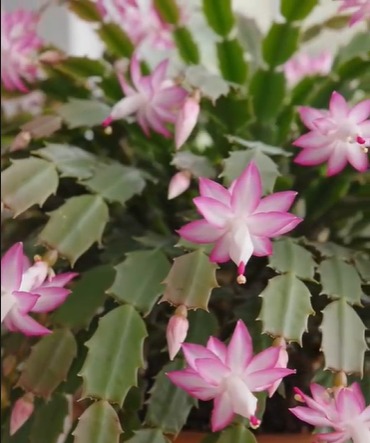
8 Simple Tricks for Fuller Growth
Want to know how to make a Christmas cactus bushier and fuller instead of long, thin, sparse, or leggy? The good news is that you don’t need complicated gardening techniques.
With the right combination of bright indirect light, strategic pruning, proper watering, well-draining soil, and regular feeding, your Christmas cactus can develop more branching and a much fuller appearance.
One of the simplest techniques is to pinch or twist off the tips of selected stem segments after flowering. This encourages branching and can help create the lush, bushy shape many gardeners want.
Here are eight practical Christmas cactus care tips to help your plant grow stronger and fuller.
1. Give Your Christmas Cactus Bright, Indirect Light
Light is one of the most important factors when you’re trying to grow a bushier Christmas cactus.
Place your plant somewhere that receives bright, indirect sunlight, such as near an east- or north-facing window. A bright location helps support healthy growth without exposing the leaves to intense afternoon sunlight.
Too little light can contribute to weak or elongated growth, while harsh direct sunlight can scorch the flattened stem segments.
The ideal setup
- Bright room
- Plenty of filtered or indirect sunlight
- Protection from intense afternoon sun
- Consistent lighting throughout the growing season
If your plant is growing noticeably toward one side, it may be receiving uneven light—which brings us to the next tip.
2. Pinch the Stem Tips to Encourage Branching
If you’re wondering how to make a Christmas cactus fuller, tip pinching is one of the easiest techniques to try.
After flowering, select a few of the longer stems and gently pinch or twist off the terminal segment.
Removing the growing tip can encourage branching from nodes below the removed section. Instead of allowing the stem to continue growing in one direction, the plant may produce additional growth points.
How to pinch a Christmas cactus
- Wait until flowering has finished.
- Choose a few long or leggy stems.
- Locate the joint between two segments.
- Gently twist or pinch off the terminal segment.
- Repeat on selected stems around the plant.
- Avoid removing too much growth at once.
You don’t need to prune every stem. A light, selective approach can help maintain the plant’s natural shape.
When should you prune a Christmas cactus?
After flowering is generally a convenient time to shape the plant and encourage branching before the next active growth period.
Avoid heavy pruning immediately before flowering, since you don’t want to remove potential flowering growth.
3. Rotate the Pot Regularly
Does your Christmas cactus look full on one side but sparse on the other?
Uneven light may be part of the reason.
Try rotating the pot every week or two so different sides of the plant receive similar light exposure.
This simple habit can help encourage more even growth and prevent the plant from leaning toward its light source.
You don’t need to rotate it every day. A gentle rotation every week or couple of weeks is usually enough to help maintain a more balanced shape.
4. Don’t Overwater Your Christmas Cactus
More water doesn’t mean faster or bushier growth.
In fact, keeping the potting mix constantly wet can create problems for the roots and ultimately weaken the plant.
Christmas cactus prefers consistent but appropriate moisture, with the growing medium allowed to dry somewhat between waterings.
Before watering, check the soil rather than following a strict calendar.
Signs you may be overwatering
- Soil remains wet for long periods
- Leaves or stem segments become limp
- Yellowing or unhealthy-looking growth
- Poor overall growth
- Unpleasant-smelling or deteriorating roots
Always use a pot with drainage holes and empty excess water from the saucer.
5. Use a Well-Draining Potting Mix
Healthy roots are essential if you want a thick, bushy Christmas cactus.
A heavy soil that stays wet for too long can make it difficult to maintain healthy roots.
A light, well-draining growing medium can provide better conditions for the root system.
A simple homemade mix can include:
- Quality potting soil
- Perlite
- Orchid bark
The goal is a growing medium that holds some moisture while allowing excess water to drain away.
Why drainage matters
The roots need access to both moisture and air. If the soil remains saturated, the root environment can become unhealthy.
A healthy root system gives the plant a much better foundation for producing vigorous new growth.
6. Feed During Active Growth
Christmas cactus can benefit from regular feeding during its active growing period.
Use a balanced, diluted houseplant fertilizer according to the product’s directions.
Avoid applying concentrated fertilizer. More fertilizer doesn’t necessarily mean more growth, and excessive fertilizer can damage roots or create an unhealthy buildup of salts in the growing medium.
A simple feeding approach
During active growth:
- Use a balanced fertilizer.
- Dilute it according to the label.
- Feed according to the product’s recommended schedule.
- Avoid excessive fertilization.
- Reduce feeding as the plant approaches its flowering period.
If you’re already using a quality potting mix and your plant is growing well, there’s no need to constantly add fertilizer.
7. Don’t Put Your Christmas Cactus in an Oversized Pot
A surprisingly common mistake is moving a Christmas cactus into a much larger pot because you want it to grow bigger.
But bigger pot doesn’t automatically mean bushier plant.
An oversized container can hold more moisture than the relatively small root system can use. This can make it harder for the soil to dry appropriately between waterings.
Christmas cactus generally doesn’t mind being somewhat root-bound.
When repotting, choose a container that is only modestly larger than the existing root system rather than dramatically increasing the pot size.
A good pot should have:
- Drainage holes
- Appropriate size for the root system
- Well-draining potting mix
- Enough room for healthy root growth
8. Give It Cooler Nights Before Flowering
If your goal isn’t just a bushier plant but also more Christmas cactus flowers, fall conditions become especially important.
Christmas cactus responds to seasonal changes in night length and temperature.
Cooler nighttime conditions and long, uninterrupted periods of darkness can help encourage flower-bud formation.
During the weeks before flowering
Try to provide:
- Cooler nighttime temperatures
- Long, uninterrupted darkness
- Bright daytime light
- Consistent care
- Appropriate watering
Avoid placing the plant where artificial light shines on it throughout the night if you’re trying to encourage flowering.
The Best Combination for a Bushier Christmas Cactus
You don’t have to rely on one trick.
The best approach is to combine several good care practices.
Bright indirect light + selective tip pinching + healthy roots + proper watering can provide a strong foundation for fuller growth.
Tip pinching encourages branching, while good light and healthy roots help support the new growth that follows.
Think of it as a complete care routine rather than a single secret fertilizer or gardening hack.
How to Make a Leggy Christmas Cactus Bushy Again
If your Christmas cactus already has long, sparse stems, don’t worry. You can often improve its appearance with better growing conditions and selective pruning.
Start by examining the plant.
Step 1: Check the light
If the plant is growing long and thin toward a window, move it to a brighter location with indirect light.
Step 2: Look at the roots and soil
Make sure the soil drains properly and isn’t staying wet for excessive periods.
Step 3: Prune selectively
After flowering, pinch or twist off the tips of some of the longest stems.
Step 4: Encourage balanced growth
Rotate the pot periodically so different sides receive similar amounts of light.
Step 5: Be patient
New branches won’t appear overnight.
Give the plant time to respond and produce new growth.
How Many Segments Should You Remove?
There’s no need to remove large portions of the plant to make it bushier.
A conservative approach is best.
Select several longer stems and remove one or a few terminal segments from each, distributing your pruning around the plant.
This can help create a more balanced appearance while leaving plenty of healthy foliage for continued growth.
If your plant is small or already stressed, prune even more lightly.
Why Is My Christmas Cactus Long and Sparse?
A Christmas cactus may become sparse for several reasons.
Insufficient Light
One of the first things to check is light. A plant that doesn’t receive enough light may produce weaker or elongated growth.
Lack of Pruning
If you never pinch the growing tips, stems may continue extending without developing the fuller branching pattern you’re looking for.
Poor Root Conditions
Waterlogged soil or inadequate drainage can affect root health and eventually weaken above-ground growth.
Incorrect Watering
Both excessive moisture and prolonged drought can stress the plant.
Nutrient Problems
Plants require nutrients for healthy growth, but fertilizer should be applied appropriately rather than excessively.
Natural Growth Habit
Christmas cactus naturally produces segmented, arching stems. Some trailing growth is completely normal.
The goal isn’t necessarily to make every stem stand upright. Instead, you’re encouraging more branching and a fuller overall plant.
How to Make a Christmas Cactus Bloom More
Growing a bushier plant and encouraging flowers are related but slightly different goals.
For flowering, focus particularly on the conditions the plant receives before its normal blooming period.
Provide bright daytime light
Keep the plant in a bright location with indirect sunlight.
Give it long, dark nights
Avoid unnecessary artificial light during the nighttime period.
Provide cooler conditions
Cooler nights in fall can help provide the seasonal conditions associated with bud formation.
Avoid moving it constantly
Once flower buds appear, try to keep conditions stable.
Don’t overwater
Maintain appropriate moisture without keeping the potting mix constantly saturated.
Christmas Cactus Care After Flowering
After your Christmas cactus finishes blooming, it’s a good time to evaluate its shape.
If some stems have become particularly long, you can selectively pinch their tips.
This is also a good opportunity to check:
- Soil drainage
- Pot size
- Light exposure
- Overall plant health
- Root condition
- Watering habits
A little maintenance after flowering can help prepare the plant for another season of growth.
Common Mistakes to Avoid
Don’t Overwater
Constantly wet soil can create unhealthy root conditions.
Don’t Use a Huge Pot
Extra soil can retain excess moisture around a relatively small root system.
Don’t Put It in Harsh Afternoon Sun
Bright indirect light is generally preferable to intense direct sunlight.
Don’t Prune Heavily Before Flowering
Removing too much growth at the wrong time can interfere with the plant’s flowering cycle.
Don’t Overfertilize
Concentrated or excessive fertilizer can harm roots.
Don’t Expect Instant Results
Branching takes time. Give your plant several weeks or longer to produce and develop new growth.
Frequently Asked Questions
How do I make my Christmas cactus bushier?
Provide bright indirect light and selectively pinch the tips of longer stems after flowering. Good drainage, appropriate watering, and healthy roots are also important for vigorous new growth.
Should I pinch the tips of my Christmas cactus?
Yes. Selectively pinching or twisting off terminal segments after flowering can encourage branching and create a fuller appearance.
When should I prune a Christmas cactus?
After flowering is generally a good time to prune or shape a Christmas cactus. Light, selective pruning is usually preferable to removing large amounts of the plant at once.
Why is my Christmas cactus growing long and thin?
Insufficient light is one possible reason for elongated growth. Uneven lighting, lack of pruning, or poor growing conditions can also contribute to a sparse appearance.
Does Christmas cactus like to be root-bound?
Christmas cactus can tolerate being somewhat root-bound, and there is generally no need to move it into a dramatically larger container. When repotting, choose an appropriately sized pot with good drainage.
How often should I water Christmas cactus?
Water based on the moisture level of the potting mix rather than following a rigid schedule. Allow the upper portion of the soil to dry somewhat before watering again, while avoiding prolonged complete dryness.
What kind of soil does Christmas cactus need?
A Christmas cactus does best in a growing medium that provides good drainage while retaining some moisture. A mixture containing quality potting soil, perlite, and orchid bark can work well.
How do I get a Christmas cactus to bloom?
Provide bright daytime light, cooler conditions in fall, and long, uninterrupted periods of darkness at night. Proper watering and healthy roots are also important.
Can I prune my Christmas cactus after it blooms?
Yes. The period after flowering is a convenient time to selectively pinch or prune longer stems to encourage branching and create a fuller shape.
Final Thoughts
If your Christmas cactus is looking long, thin, or sparse, you don’t necessarily need an elaborate treatment to improve its appearance.
Start with the basics.
Give your plant bright indirect light, keep the roots healthy with a well-draining growing medium, avoid overwatering, and selectively pinch the tips of longer stems after flowering.
Then give it time.
The combination of regular tip pinching, good light, balanced watering, healthy roots, and appropriate feeding can help encourage a fuller, more branched Christmas cactus over time.
And if beautiful holiday flowers are your goal, don’t forget about the importance of cooler nights and long, uninterrupted darkness during the period leading up to flowering.
With consistent care, your Christmas cactus can become not only healthier but also fuller, greener, and covered with beautiful seasonal blooms year after year.
Quick Christmas Cactus Bushiness Checklist
- 🌵 Bright, indirect light
- ✂️ Pinch selected stem tips after flowering
- 🔄 Rotate the pot every week or two
- 💧 Avoid constantly wet soil
- 🌱 Use a well-draining potting mix
- 🌿 Feed lightly during active growth
- 🪴 Avoid oversized pots
- 🌙 Provide cooler nights and long darkness before flowering
- 🌸 Keep conditions stable once buds appear
- ⏳ Give new branches time to develop