
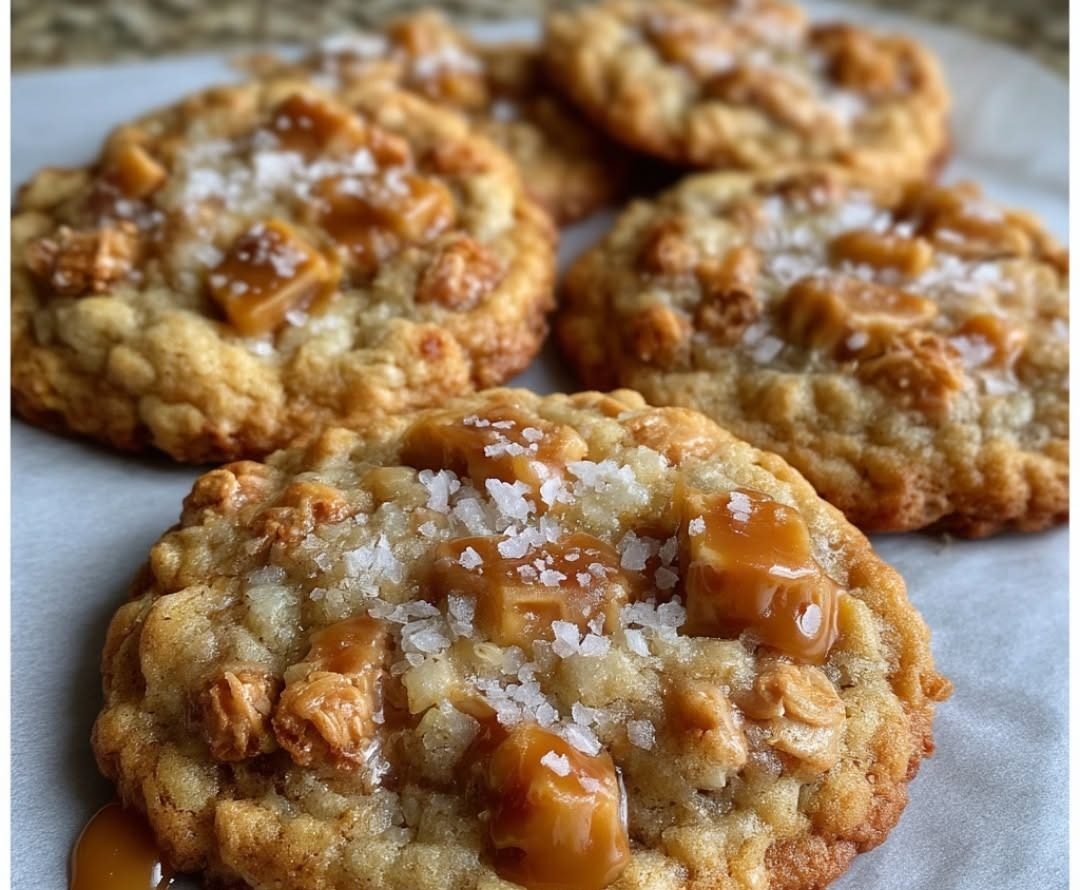
Chewy, Buttery & Irresistible
There’s nothing quite like the smell of freshly baked cookies filling your kitchen, especially when they’re packed with chewy oats, rich caramel, and a little sprinkle of flaky sea salt. These Salted Caramel Oatmeal Cookies bring together the comforting taste of homemade oatmeal cookies with the sweet, buttery goodness of caramel for a treat that’s hard to resist.
Made with old-fashioned oats, brown sugar, butter, and caramel bits, these cookies have deliciously chewy centers, lightly golden edges, and little pockets of melted caramel in every bite. The finishing touch is a sprinkle of sea salt that balances the sweetness and makes the caramel flavor shine.
Whether you’re baking for a family gathering, preparing a holiday cookie tray, or simply craving something sweet with your afternoon coffee, these cookies are an easy homemade treat worth sharing.
Best of all, the recipe uses familiar baking ingredients and straightforward steps. No complicated techniques are needed—just mix the dough, fold in the oats and caramel, bake until golden, and finish with a pinch of sea salt.
Why You’ll Love These Salted Caramel Oatmeal Cookies
- Sweet and salty perfection: Rich caramel and flaky sea salt create a delicious balance of flavors.
- Chewy oatmeal texture: Old-fashioned oats give the cookies a hearty bite and comforting homemade character.
- Soft centers and golden edges: The combination of brown sugar, butter, and careful baking creates a satisfying texture.
- Easy to prepare: The dough uses basic baking techniques and everyday ingredients.
- Perfect for sharing: These cookies are wonderful for potlucks, bake sales, holiday parties, and family gatherings.
- Customizable: Add pecans, chocolate chips, or extra caramel to make them your own.
- Great with your favorite drink: Enjoy them with coffee, tea, or a cold glass of milk.
Ingredients You’ll Need
1. Unsalted Butter (1 cup, softened)
Butter gives the cookies their rich flavor and helps create tender, chewy centers.
Use softened butter rather than melted butter. It should be soft enough to press with a finger but not greasy or liquid. Properly softened butter creams more effectively with the sugars, helping incorporate air into the dough.
Unsalted butter also allows you to control the amount of salt in the recipe.
2. Brown Sugar (1 cup, packed)
Brown sugar adds sweetness, moisture, and a warm caramel-like flavor that pairs beautifully with the caramel pieces.
Pack the brown sugar firmly into your measuring cup before measuring. Light or dark brown sugar can work, although dark brown sugar will produce a deeper molasses flavor.
3. Granulated Sugar (½ cup)
Granulated sugar balances the brown sugar and contributes to the cookies’ structure and golden edges.
Using both sugars helps create a more complex flavor than using only one type.
4. Eggs (2 large)
Eggs bind the ingredients together and provide structure. They also help the cookies hold their shape as they bake.
For easier mixing, let the eggs sit at room temperature briefly before preparing the dough.
5. Vanilla Extract (1 teaspoon)
Vanilla enhances the buttery, brown sugar, and caramel flavors. It adds warmth and makes the cookies smell wonderful while baking.
Pure vanilla extract or a good-quality vanilla flavoring will work.
6. All-Purpose Flour (1½ cups)
Flour provides the structure needed to hold the oats and caramel pieces together.
Measure it accurately to avoid overly dry cookies. Too much flour can make the cookies thick and cakey rather than chewy.
7. Baking Soda (1 teaspoon)
Baking soda helps the cookies spread and brown during baking. It works with the other ingredients to create the desired texture.
Make sure your baking soda is fresh for reliable results.
8. Salt (½ teaspoon)
A little salt balances the sweetness of the sugars and caramel. The recipe uses unsalted butter, so this measured salt contributes to the overall flavor.
The finishing sea salt adds a separate salty crunch.
9. Old-Fashioned Oats (3 cups)
Old-fashioned oats give these cookies their signature chewy texture and hearty flavor.
They hold their shape during baking and provide more texture than instant oats. For the best result, use old-fashioned rolled oats rather than quick-cooking oats.
10. Caramel Bits or Soft Caramel Candies (1 cup)
Caramel is the star of this recipe. Caramel bits are convenient because they’re designed for baking, while chopped soft caramel candies can create delicious gooey pockets.
If using soft caramel candies, chop them into small pieces so they’re distributed more evenly throughout the dough.
Keep in mind that some caramels may melt and spread more than others. Avoid using large chunks that could melt onto the baking sheet.
11. Sea Salt for Sprinkling
A small pinch of sea salt on each freshly baked cookie provides a delicious contrast to the sweet caramel.
Flaky sea salt is especially nice because it adds a light crunch and an attractive finish. Sprinkle it on immediately after baking so it adheres to the warm cookies.
How to Make Salted Caramel Oatmeal Cookies
Step 1: Preheat the Oven
Preheat your oven to 350°F (175°C). Line a baking sheet with parchment paper.
Parchment paper helps prevent sticking, makes cleanup easier, and reduces the chance of caramel adhering directly to the baking sheet.
If you have multiple baking sheets, prepare them in advance so you can bake in batches.
Step 2: Cream the Butter and Sugars
In a large mixing bowl, combine the softened butter, packed brown sugar, and granulated sugar.
Beat until the mixture looks light and fluffy. This usually takes a few minutes with an electric mixer.
Scrape down the sides of the bowl as needed to make sure the ingredients are evenly combined.
This step helps create a good cookie texture, so avoid rushing it.
Step 3: Add the Eggs and Vanilla
Beat in the eggs one at a time, mixing well after each addition.
Add the vanilla extract and mix until incorporated.
If the mixture looks slightly curdled, don’t worry too much. Adding the dry ingredients gradually should help bring the dough together.
Step 4: Mix the Dry Ingredients
In a separate bowl, whisk together the all-purpose flour, baking soda, and measured salt.
Whisking distributes the baking soda evenly, helping the cookies bake more consistently.
Step 5: Combine the Wet and Dry Mixtures
Gradually add the dry ingredients to the butter mixture.
Mix on low speed or stir by hand until the flour is just incorporated. Avoid overmixing, which can make the cookies tougher.
The dough should look thick enough to hold the oats and caramel pieces.
Step 6: Fold in the Oats and Caramel
Add the old-fashioned oats and caramel bits or chopped soft caramel candies.
Fold them into the dough until evenly distributed. Make sure each portion will contain a good balance of oats and caramel.
If the dough seems unusually soft or warm, refrigerate it for 20–30 minutes before baking. Chilling can help reduce excessive spreading.
Step 7: Portion the Cookie Dough
Drop rounded tablespoons of dough onto the prepared baking sheet, leaving approximately 2 inches between each cookie.
The cookies need room to spread, so avoid overcrowding the tray.
For more uniform cookies, use a cookie scoop and keep the dough portions similar in size.
Step 8: Bake Until Golden
Bake for 10–12 minutes, or until the edges are golden brown and the centers look just set.
The cookies may still appear slightly soft in the middle when you remove them. That’s normal, as they’ll continue to firm up while cooling.
Ovens vary, so begin checking near the 10-minute mark. If the cookies are larger than rounded tablespoons, they may need additional time.
Step 9: Add the Sea Salt
Remove the cookies from the oven and immediately sprinkle a small pinch of sea salt over each one.
The warmth helps the salt adhere to the surface, and the salty finish complements the sweet caramel.
Start with a light sprinkle because the caramel and cookie dough are already sweet, and too much salt can overpower the flavor.
Step 10: Cool and Serve
Allow the cookies to cool on the baking sheet for a few minutes before transferring them to a wire rack.
The caramel can be extremely hot immediately after baking, so let the cookies cool before eating.
Once set, enjoy them with a glass of milk, a cup of coffee, or your favorite tea.
Tips for the Best Salted Caramel Oatmeal Cookies
Use softened, not melted, butter. Melted butter changes the dough’s structure and can make the cookies spread too much.
Measure the flour carefully. Too much flour can produce dry cookies. Spoon the flour into the measuring cup and level it off, or weigh it for more consistent results.
Choose old-fashioned rolled oats. These give the cookies a chewy, hearty texture that works especially well with caramel.
Use baking-friendly caramel bits when possible. Some soft candies melt more aggressively than others. Smaller pieces are easier to distribute throughout the dough.
Don’t overbake. Remove the cookies when the edges are golden and the centers are just set. They will continue to firm up as they cool.
Chill the dough if it feels too soft. A short refrigeration period can help the cookies hold their shape, especially in a warm kitchen.
Sprinkle the salt while the cookies are warm. This helps the finishing salt stay in place.
Let the caramel cool before eating. Melted caramel retains heat and can burn your mouth. Give the cookies time to cool before serving.
Bake one test cookie if needed. If you’re unsure how much the dough will spread, bake a single cookie first and adjust the chilling time or spacing if necessary.
Easy Variations
Salted Caramel Chocolate Chip Oatmeal Cookies
Add ½ cup of semisweet chocolate chips to the dough along with the caramel. Chocolate adds a rich flavor that complements the brown sugar and oats.
Semisweet chocolate is a good choice if you want to avoid making the cookies overly sweet.
Salted Caramel Pecan Oatmeal Cookies
Fold in ½ cup of chopped pecans for a nutty crunch. Pecans pair particularly well with caramel and make the cookies taste extra cozy.
Cinnamon Salted Caramel Oatmeal Cookies
Add ½ teaspoon of ground cinnamon to the dry ingredients. The gentle warmth of cinnamon works beautifully with the oats and caramel.
Extra-Caramel Oatmeal Cookies
For a stronger caramel flavor, add a little more caramel, but avoid overloading the dough. Too many caramel pieces can cause excessive melting or make the cookies difficult to remove from the baking sheet.
Dark Chocolate Salted Caramel Cookies
Replace part of the caramel or add a small amount of dark chocolate chips. The slightly bitter chocolate balances the sweetness and gives the cookies a more sophisticated flavor.
Holiday Salted Caramel Cookies
Add chopped pecans and a small pinch of cinnamon, then finish with flaky sea salt. These cookies are a lovely addition to holiday dessert trays and homemade cookie gifts.
What to Serve with Salted Caramel Oatmeal Cookies
These cookies are delicious on their own, but they pair well with plenty of drinks and desserts.
- Cold milk: A classic combination that balances the rich caramel flavor.
- Hot coffee: The slight bitterness of coffee complements the sweetness of caramel.
- Black tea: A warm cup of tea makes these cookies a lovely afternoon treat.
- Hot chocolate: A cozy choice for cold weather, especially when serving the cookies warm.
- Vanilla ice cream: Crumble a cookie over a scoop of ice cream for an easy dessert.
- Fresh apple slices: A crisp, refreshing contrast to the buttery cookies.
For a dessert platter, arrange the cookies with brownies, chocolate bark, and other homemade treats.
How to Store Salted Caramel Oatmeal Cookies
At room temperature: Allow the cookies to cool completely before placing them in an airtight container. Store in a cool, dry place for up to 4–5 days for best quality.
Keep them soft: Store the cookies in a well-sealed container to help prevent them from drying out. Make sure they are completely cool before closing the container.
Freezing baked cookies: Place cooled cookies in a freezer-safe container or bag, separating layers with parchment paper. Freeze for up to 2–3 months for best quality.
Freezing cookie dough: Portion the dough into balls and freeze them on a tray until firm. Transfer the frozen portions to a freezer-safe bag or container. Bake from frozen, adding a little extra time as needed and checking the centers for doneness.
Reheating: Warm a cookie in the microwave for a few seconds if you prefer a soft, slightly warm texture. Be careful, as the caramel can become very hot.
Frequently Asked Questions
Can I use quick oats instead of old-fashioned oats?
Old-fashioned oats are recommended because they provide a chewier texture. Quick oats may work, but the cookies can turn out softer and less textured. Avoid assuming that the two types will produce exactly the same result.
Why did my salted caramel oatmeal cookies spread too much?
Butter that is too warm, very soft dough, or an overly warm baking sheet can cause excessive spreading. Chill the dough for 20–30 minutes if needed, and place the dough on a cool baking sheet.
Also check that you measured the flour correctly and used the specified amount of oats.
Why are my oatmeal cookies dry?
Too much flour, overbaking, or inaccurate ingredient measurements can make the cookies dry. Measure the flour carefully and remove the cookies once the edges are golden and the centers are just set.
Can I use soft caramel candies instead of caramel bits?
Yes. Chop soft caramel candies into small pieces before adding them to the dough. Keep in mind that different caramel candies melt differently, so the final texture may vary.
Should I use flaky sea salt or regular salt on top?
Flaky sea salt is ideal for finishing because it creates small bursts of saltiness and a pleasant texture. Regular fine salt can be stronger in each bite, so use less if that’s all you have.
Can I make the cookie dough ahead of time?
Yes. Cover the dough and refrigerate it for several hours or overnight. Chilled dough may be firmer, so let it sit briefly at room temperature if necessary before portioning.
If the dough has been refrigerated overnight, check how much the cookies spread during the first batch before baking the rest.
How do I know when the cookies are done?
Look for golden edges and centers that are just set. The middle may remain a little soft, but it shouldn’t look like raw dough. The cookies will continue to firm up on the baking sheet.
Can I make these cookies without the sea salt topping?
Absolutely. The cookies will still have a rich caramel and oatmeal flavor. However, the finishing salt is what creates the classic sweet-and-salty contrast.
Can I make these cookies gluten-free?
You can experiment with a suitable gluten-free all-purpose flour blend and certified gluten-free oats. Results may differ from the original recipe, so use a blend designed for baking and check all ingredient labels for cross-contact concerns.
Can I freeze salted caramel oatmeal cookies?
Yes. Freeze fully cooled cookies in a freezer-safe container for up to 2–3 months for best quality. Thaw at room temperature or warm briefly before serving, taking care with the hot caramel.
Final Thoughts
These Salted Caramel Oatmeal Cookies bring together everything you want in a homemade cookie: chewy oats, buttery dough, rich caramel, and a finishing sprinkle of sea salt.
They’re easy enough for everyday baking and special enough to share with family and friends. Serve them with coffee, pack them into a lunchbox, or add them to a holiday cookie tray for a sweet treat everyone can enjoy.
Once you try the combination of warm caramel and flaky sea salt, these cookies may become one of your favorite oatmeal cookie recipes!
Recipe Card
Salted Caramel Oatmeal Cookies
Prep Time: Approximately 15 minutes
Cook Time: 10–12 minutes per batch
Total Time: Approximately 25–30 minutes, depending on baking batches
Yield: Varies with cookie size; approximately 24–30 cookies is a reasonable planning estimate
Category: Dessert, Cookies, Baking
Method: Oven-Baked
Cuisine: American-inspired
Ingredients
- 1 cup unsalted butter, softened
- 1 cup brown sugar, packed
- ½ cup granulated sugar
- 2 large eggs
- 1 teaspoon vanilla extract
- 1½ cups all-purpose flour
- 1 teaspoon baking soda
- ½ teaspoon salt
- 3 cups old-fashioned oats
- 1 cup caramel bits or chopped soft caramel candies
- Sea salt, for sprinkling
Instructions
- Preheat the oven to 350°F (175°C) and line a baking sheet with parchment paper.
- Cream the softened butter, brown sugar, and granulated sugar until light and fluffy.
- Beat in the eggs one at a time, then mix in the vanilla extract.
- In a separate bowl, whisk together the flour, baking soda, and salt.
- Gradually add the dry ingredients to the wet mixture, mixing until just combined.
- Fold in the oats and caramel pieces.
- Drop rounded tablespoons of dough onto the prepared baking sheet, leaving about 2 inches between cookies.
- Bake for 10–12 minutes, until the edges are golden and the centers are just set.
- Immediately sprinkle the warm cookies with a little sea salt.
- Cool on the baking sheet for a few minutes, then transfer to a wire rack to cool completely.
Storage: Keep in an airtight container at room temperature for 4–5 days, or freeze for up to 2–3 months for best quality.