
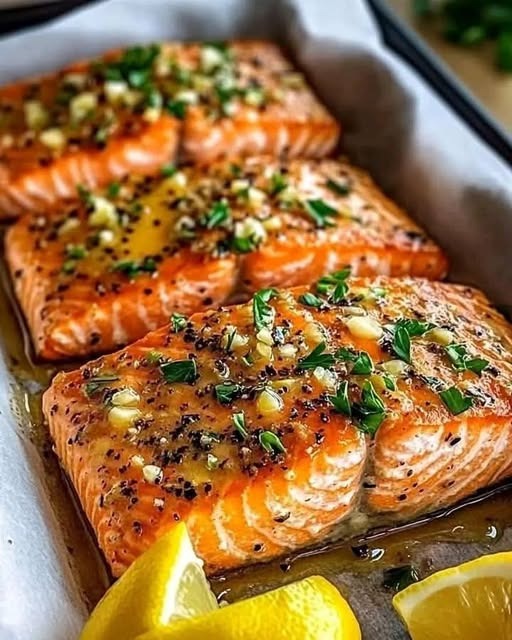
Looking for an easy oven-baked salmon recipe that’s flavorful, juicy, and ready in about 20 minutes? This simple baked salmon is one of those recipes you’ll want to keep on repeat.
Fresh salmon fillets are brushed with a simple mixture of olive oil, fresh lemon juice, garlic, paprika, parsley, salt, and black pepper, then baked until tender and flaky.
The result is perfectly seasoned salmon with a bright lemon-garlic flavor and lightly golden edges. It’s quick enough for a weeknight dinner but delicious enough to serve when you’re entertaining.
Serve it with roasted vegetables, rice, potatoes, salad, or your favorite side dishes for a complete meal.
Why You’ll Love This Oven-Baked Salmon
- Quick and easy: Dinner can be on the table in about 20 minutes.
- Simple ingredients: You only need a handful of everyday ingredients.
- One-pan recipe: Minimal cleanup makes this perfect for busy nights.
- Flavorful: Garlic, lemon, paprika, and parsley complement the salmon beautifully.
- Tender and flaky: Baking keeps the salmon moist while creating a lightly golden exterior.
- Versatile: Pair it with almost any vegetable, grain, or potato side dish.
- Healthy dinner option: Salmon is naturally rich in protein and omega-3 fatty acids.
Ingredients You’ll Need
Salmon Fillets
Use four salmon fillets, approximately 6 ounces each.
Skin-on or skinless salmon can be used. If your fillets have skin, place them skin-side down on the baking sheet.
Try to choose fillets that are similar in thickness so they cook at approximately the same rate.
Olive Oil
Olive oil helps keep the salmon moist while adding a subtle savory flavor.
Fresh Lemon Juice
Lemon juice adds brightness and balances the richness of the salmon.
Freshly squeezed lemon juice is ideal.
Fresh Garlic
Minced garlic gives the salmon a delicious savory flavor that works especially well with lemon.
Paprika
Paprika adds mild warmth and beautiful color to the surface of the salmon.
Parsley
Dried parsley works perfectly for convenience, but fresh chopped parsley can provide an even brighter herbal flavor.
Salt and Black Pepper
Simple seasoning brings out the natural flavor of the salmon.
Lemon Wedges
Serve fresh lemon wedges alongside the finished salmon so everyone can add as much lemon as they like.
Oven-Baked Salmon Recipe
Prep Time: 5 minutes
Cook Time: 12–15 minutes
Total Time: About 20 minutes
Servings: 4
Course: Dinner
Cuisine: American-inspired
Keyword: oven-baked salmon
Ingredients
- 4 salmon fillets, about 6 oz each
- 2 tablespoons olive oil
- 2 tablespoons fresh lemon juice
- 2 cloves garlic, minced
- 1 teaspoon paprika
- 1 teaspoon dried parsley, or 1 tablespoon fresh parsley, chopped
- Salt, to taste
- Black pepper, to taste
- Lemon wedges, for serving
How to Bake Salmon in the Oven
1. Preheat the Oven
Preheat your oven to 400°F (200°C).
Line a baking sheet with parchment paper or lightly grease it.
Using parchment makes cleanup especially easy.
2. Prepare the Salmon
Place the salmon fillets on the prepared baking sheet with the skin side down, if your salmon has skin.
Pat the fillets dry with paper towels.
Removing excess surface moisture helps the seasoning adhere better and encourages better browning.
3. Make the Lemon-Garlic Marinade
In a small bowl, combine:
- Olive oil
- Fresh lemon juice
- Minced garlic
- Paprika
- Parsley
- Salt
- Black pepper
Stir until everything is well combined.
4. Season the Salmon
Brush the lemon-garlic mixture generously over the top of each salmon fillet.
Make sure the seasoning is distributed evenly.
For even more flavor, allow the seasoned salmon to sit for a few minutes while the oven finishes preheating.
5. Bake the Salmon
Place the baking sheet in the preheated oven.
Bake for approximately 12–15 minutes, depending on the thickness of the fillets.
The salmon should become opaque and flake easily when tested with a fork.
For the most reliable results, check the internal temperature with an instant-read thermometer rather than relying only on cooking time.
6. Serve
Remove the salmon from the oven and let it rest briefly.
Serve immediately with fresh lemon wedges and your favorite side dishes.
A little fresh parsley sprinkled over the top makes a beautiful finishing touch.
How Long to Bake Salmon at 400°F
At 400°F (200°C), salmon fillets generally take approximately 12–15 minutes to bake.
However, cooking time depends on the thickness of the fillets.
Thinner pieces may cook faster, while thick center-cut fillets may require additional time.
Rather than relying entirely on the clock, check the thickest part of the salmon for doneness.
For food safety, salmon should reach an internal temperature of 145°F (63°C).
Tips for Perfect Oven-Baked Salmon
Don’t Overcook the Salmon
One of the biggest mistakes when baking salmon is leaving it in the oven too long.
Start checking the fillets toward the lower end of the suggested cooking time.
Choose Similar-Sized Fillets
If possible, choose salmon pieces that are similar in thickness.
This helps them finish cooking at approximately the same time.
Pat the Salmon Dry
A quick pat with paper towels removes excess moisture from the surface and helps the seasoning stick.
Don’t Skip the Lemon
The acidity of fresh lemon juice balances the richness of salmon and gives the finished dish a fresh, bright flavor.
Use Fresh Garlic
Freshly minced garlic provides much more vibrant flavor than pre-minced garlic.
Let the Salmon Rest Briefly
Allowing the salmon to rest for a couple of minutes after baking gives the juices a chance to settle before serving.
How to Tell When Salmon Is Done
The easiest way to check salmon is with an instant-read thermometer inserted into the thickest part of the fillet.
For food safety, the salmon should reach 145°F (63°C).
You can also check the texture. Properly cooked salmon should appear opaque and should flake easily with a fork.
Avoid repeatedly cutting into the fillet to check for doneness because this can cause moisture to escape.
Should You Bake Salmon With the Skin On?
Yes.
If your salmon has skin, baking it skin-side down is an easy way to protect the flesh from the hot baking sheet.
The skin also helps hold the fillet together while it cooks.
You can remove the skin before serving if you prefer.
What to Serve With Oven-Baked Salmon
This easy salmon recipe pairs well with almost any side dish.
Vegetables
Try serving it with:
- Roasted broccoli
- Green beans
- Asparagus
- Brussels sprouts
- Roasted carrots
- Zucchini
- Sautéed spinach
Potatoes
Salmon is delicious with:
- Roasted potatoes
- Mashed potatoes
- Crispy smashed potatoes
- Baked potatoes
- Garlic butter potatoes
Rice and Grains
For a heartier meal, serve it with:
- White rice
- Brown rice
- Garlic rice
- Quinoa
- Couscous
- Wild rice
Fresh Salads
A crisp green salad with lemon dressing makes an especially good pairing because the acidity complements the rich salmon.
Easy Oven-Baked Salmon Variations
Once you’ve mastered this basic recipe, there are plenty of ways to change the flavor.
Honey Garlic Salmon
Add a little honey to the olive oil, lemon, and garlic mixture for a sweet and savory glaze.
Lemon Butter Salmon
Replace some of the olive oil with melted butter for an extra-rich lemon-butter flavor.
Garlic Parmesan Salmon
Sprinkle grated Parmesan over the seasoned salmon before baking.
Spicy Baked Salmon
Add red pepper flakes or cayenne pepper to the seasoning mixture.
Herb-Crusted Salmon
Add fresh dill, parsley, thyme, or rosemary.
Cajun Salmon
Replace the paprika and dried parsley with your favorite Cajun seasoning.
Mediterranean Salmon
Add oregano, garlic, lemon, olive oil, and fresh parsley, then serve with tomatoes, cucumber, olives, and a simple salad.
Can I Use Frozen Salmon?
Yes.
For the most consistent results, thaw frozen salmon in the refrigerator before cooking.
Pat the thawed fillets dry before seasoning.
If baking directly from frozen, the cooking time will be longer, and you’ll need to check the thickest part carefully for doneness.
Can I Use Skinless Salmon?
Absolutely.
Skinless salmon works perfectly in this recipe.
Simply place the fillets directly on the parchment-lined baking sheet and continue with the recipe as written.
Can I Prepare the Salmon Ahead of Time?
You can prepare the seasoning mixture ahead of time and keep it refrigerated until you’re ready to cook.
For the best texture, salmon is best baked shortly before serving.
You can also season the salmon shortly before cooking rather than leaving it in the lemon juice for an extended period.
How to Store Leftover Baked Salmon
Allow leftover salmon to cool appropriately, then transfer it to an airtight container and refrigerate promptly.
Use leftovers within a few days and reheat gently.
Salmon can dry out when reheated at very high temperatures, so gentle reheating is preferable.
How to Reheat Baked Salmon
Oven
Place the salmon in a baking dish, cover loosely, and warm in a moderate oven until heated through.
Microwave
Microwave in short intervals at reduced power to help prevent the salmon from drying out.
Stovetop
Warm gently in a covered skillet with a small splash of water or broth.
Frequently Asked Questions
How long does salmon take to bake at 400°F?
A typical 6-ounce salmon fillet takes approximately 12–15 minutes at 400°F (200°C), although thickness can significantly affect cooking time.
What temperature should baked salmon reach?
For food safety, salmon should reach an internal temperature of 145°F (63°C).
Should I cover salmon when baking?
You don’t need to cover the salmon for this recipe. Leaving it uncovered allows the top to roast and develop more color.
Is it better to bake salmon in foil or on parchment?
Both methods work. Parchment makes cleanup easy while allowing the salmon to roast directly in the oven’s heat.
Foil can create a more enclosed, moist cooking environment.
How do you keep baked salmon from drying out?
Avoid overcooking it, use some fat such as olive oil or butter, and start checking the salmon early because cooking times vary depending on thickness.
Can I use fresh or dried parsley?
Both work well. Use 1 teaspoon dried parsley or approximately 1 tablespoon fresh chopped parsley.
What is the best salmon for baking?
Atlantic salmon and Pacific salmon varieties can both work well. Choose fresh-looking fillets with a firm texture and a thickness that is relatively consistent across the pieces.
Recipe Notes
For extra lemon flavor: Serve with fresh lemon wedges and add a little lemon zest to the seasoning mixture.
For a richer dish: Replace some of the olive oil with melted butter.
For spicy salmon: Add red pepper flakes or cayenne.
For crispy edges: Bake uncovered and avoid overcrowding the baking sheet.
For perfectly cooked salmon: Use an instant-read thermometer to check the thickest part of the fillet.
Why This Recipe Works
This recipe keeps the preparation simple while layering several complementary flavors.
Olive oil adds richness and helps prevent the salmon from drying out.
Fresh lemon juice provides acidity that balances the natural richness of the fish.
Garlic adds savory depth.
Paprika contributes mild warmth and beautiful color.
Parsley adds a subtle herbal note.
Finally, baking at 400°F (200°C) provides enough heat to cook the salmon quickly while allowing the seasoning to develop a lightly roasted finish.