
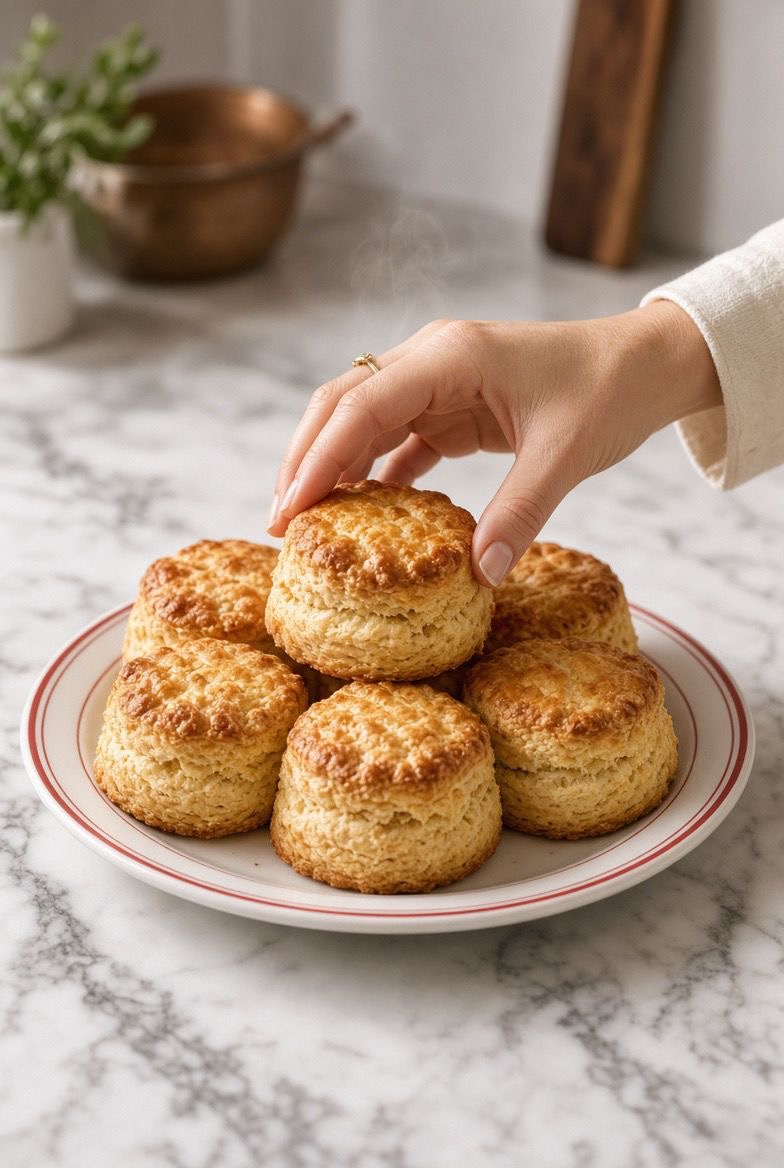
If you love old-fashioned Southern biscuits, Dolly Parton’s famous biscuits are a recipe worth putting on your baking list. These homemade buttermilk biscuits are tender, flaky, buttery-soft, and wonderfully simple to make.
The recipe uses a traditional Southern ingredient that may surprise some modern home cooks: lard. While lard might not be as common in kitchens today, generations of Southern cooks relied on it to create biscuits with a delicate texture and plenty of flaky layers.
And if lard isn’t your thing, don’t worry. You can easily substitute vegetable shortening or very cold butter.
Serve these warm biscuits with strawberry jam, honey, butter, sausage gravy, or your favorite Southern breakfast dishes. They’re especially delicious straight from the oven when the edges are golden and the centers are still soft.
Why You’ll Love Dolly Parton’s Biscuits
There’s something special about a simple biscuit recipe. You don’t need complicated ingredients or fancy equipment—just flour, baking powder, salt, baking soda, fat, and buttermilk.
Here are a few reasons this recipe is worth trying:
- Simple ingredients: Most are pantry staples.
- Tender texture: Lard or shortening helps create soft, flaky biscuits.
- Quick preparation: The dough comes together without much fuss.
- Old-fashioned flavor: It has the comforting taste of traditional Southern baking.
- Versatile: Enjoy them with sweet or savory toppings.
- Perfect for breakfast: They’re wonderful with jam, honey, butter, eggs, or gravy.
What Makes These Biscuits Special?
The secret is less about complicated technique and more about how you handle the dough.
Cold fat creates little pockets throughout the dough. As the biscuits bake, those pockets help produce the flaky texture we associate with a good homemade biscuit.
Buttermilk also plays an important role. Its tangy flavor balances the richness of the fat, while its acidity works with the baking soda to help the biscuits rise.
The result is a biscuit that’s crisp and golden on the outside while remaining tender inside.
Ingredients for Dolly Parton’s Famous Biscuits
Here’s everything you’ll need:
All-Purpose Flour
All-purpose flour works perfectly for this recipe and gives the biscuits enough structure without making them overly dense.
Baking Powder
Baking powder provides most of the lift, helping the biscuits become light and fluffy in the oven.
Salt
Salt enhances the flavor of every other ingredient. Don’t skip it.
Baking Soda
Just a small amount of baking soda helps balance the acidity of the buttermilk and contributes to browning.
Lard or Vegetable Shortening
Traditional lard gives these biscuits their classic tender texture.
If you don’t have lard, vegetable shortening is an easy substitute.
Buttermilk
Buttermilk adds moisture and a subtle tangy flavor. It also reacts with the baking soda to help the dough rise.
Dolly Parton’s Famous Biscuits Recipe
Ingredients
- 2 cups all-purpose flour
- 1 tablespoon baking powder
- 1 teaspoon salt
- 1/4 teaspoon baking soda
- 5 tablespoons lard or vegetable shortening
- 1 cup buttermilk
Instructions
1. Preheat the oven.
Preheat your oven to 450°F (230°C). A properly heated oven is important for getting good rise and golden edges.
2. Combine the dry ingredients.
Sift the flour, baking powder, salt, and baking soda together in a large mixing bowl.
3. Cut in the fat.
Add the lard or vegetable shortening and cut it into the flour mixture until it resembles coarse crumbs.
If you’re using butter instead, make sure it is very cold and cut it into small cubes before incorporating it.
4. Add the buttermilk.
Pour in the buttermilk and gently mix until a soft dough forms.
Don’t worry if the dough looks a little rough. Biscuit dough doesn’t need to look perfectly smooth.
If it’s extremely sticky, sprinkle in a small amount of flour.
5. Chill the dough.
Turn the dough onto a lightly floured surface and knead gently for about 2 minutes.
Wrap the dough and refrigerate it for approximately 20 minutes.
This chilling step helps keep the fat cold and makes the dough easier to work with.
6. Roll out the dough.
Place the chilled dough on a lightly floured surface and roll it to approximately 1/2 inch thick.
Try not to flatten the dough excessively. Keeping some thickness gives the biscuits room to rise.
7. Cut the biscuits.
Use a 2-inch biscuit cutter to cut the dough.
Press the cutter straight down and lift it straight back up. Avoid twisting the cutter.
Place the biscuits about an inch apart on an ungreased baking sheet.
8. Bake.
Bake for 13–15 minutes, or until the biscuits are beautifully golden brown.
Remove them from the oven and serve warm.
The Secret to Tender, Flaky Biscuits
Making great homemade biscuits isn’t difficult, but a few small details can make a huge difference.
Keep Your Fat Cold
Cold fat is one of the most important biscuit-making principles.
If you’re using butter, take it directly from the refrigerator and cut it into small pieces before working it into the flour.
As the biscuits bake, the cold butter melts and creates pockets of steam, contributing to flaky layers.
Lard and shortening also work beautifully because they help produce a tender crumb.
Don’t Overwork the Dough
This is where many homemade biscuits go wrong.
Once the buttermilk is added, mix the dough gently. Excessive kneading develops gluten, which can make the finished biscuits chewy or tough instead of soft and tender.
Think of biscuit dough as something to handle as little as possible.
Don’t Skip the Refrigeration
The 20-minute chill is worth doing.
It allows the fat to firm back up after mixing and makes the dough easier to roll and cut.
It can also help prevent the biscuits from spreading too much in the oven.
Cut Straight Down
When cutting your biscuits, don’t twist the cutter.
Press straight down and lift straight up.
Twisting can seal the edges of the dough and potentially interfere with how the biscuits rise.
Bake at a High Temperature
These biscuits bake at 450°F, which is considerably hotter than many everyday baked goods.
That high temperature helps the biscuits rise quickly while developing a golden exterior.
Can You Substitute Butter for Lard?
Yes.
If you don’t have lard or simply prefer butter, substitute 5 tablespoons of very cold butter.
Cut the butter into small cubes and work it into the flour mixture until you have coarse crumbs.
For the best texture, avoid letting the butter become warm and soft while preparing the dough.
Can You Use Shortening Instead of Lard?
Absolutely.
Vegetable shortening is a convenient alternative to lard and can produce tender, flaky biscuits.
Use the same 5 tablespoons called for in the recipe.
The flavor will be somewhat different from biscuits made with lard, but the texture can still be excellent.
What to Serve With Dolly Parton’s Biscuits
Fresh biscuits are incredibly versatile.
For a simple sweet breakfast, split a warm biscuit and add:
- Strawberry jam
- Raspberry preserves
- Honey
- Butter
- Peach preserves
- Apple butter
For a savory meal, try:
- Sausage gravy
- Fried chicken
- Scrambled eggs
- Bacon and eggs
- Country ham
- Sausage and cheese
Personally, strawberry jam is hard to beat. The sweet-tart jam pairs beautifully with the warm, slightly salty biscuit.
How to Get Taller, Fluffier Biscuits
If your biscuits aren’t rising as much as you’d like, check a few things.
First, make sure your baking powder is fresh. Old leavening agents can lose their effectiveness.
Next, don’t roll the dough too thin. About 1/2 inch is the recommended thickness for this recipe.
Also, avoid pressing down on the dough repeatedly. Gather leftover dough gently and cut additional biscuits without excessive kneading.
Finally, make sure your oven has fully reached 450°F before the biscuits go inside.
Why Are My Biscuits Tough?
Tough biscuits are usually caused by overworking the dough or adding too much flour.
When flour is mixed and kneaded excessively, gluten develops. While gluten is useful for bread, too much can make biscuits dense and chewy.
Mix just until the dough comes together and knead gently.
When adding flour to a sticky dough, add only enough to make it manageable.
Why Did My Biscuits Spread?
Biscuits can spread if the fat becomes too warm before baking.
That’s another reason the refrigerator step is helpful.
Also check the consistency of the dough. If too much liquid or fat is added, the biscuits may not hold their shape properly.
Starting with cold ingredients and chilling the dough before rolling can help.
Can I Make the Biscuit Dough Ahead of Time?
Yes, you can prepare biscuit dough ahead of time, although freshly baked biscuits generally have the best texture.
If preparing ahead, keep the dough properly refrigerated and bake it as soon as practical.
For longer storage, you can also consider cutting the biscuits and freezing them before baking. Bake them from frozen, allowing additional baking time as needed.
How to Store Leftover Biscuits
Homemade biscuits are best when they’re fresh, but leftovers can be stored in an airtight container at room temperature for a short period.
For longer storage, refrigerate or freeze them.
To bring leftover biscuits back to life, warm them gently in the oven rather than relying solely on the microwave. This helps restore some of their original texture.
A Simple Old-Fashioned Biscuit Recipe
What I love most about this recipe is how uncomplicated it is.
There are no unusual ingredients, complicated folding techniques, or special equipment required.
It’s the kind of recipe that feels right at home in an old-fashioned kitchen: flour on the counter, a mixing bowl, a biscuit cutter, and a hot oven.
And perhaps that’s exactly why recipes like this continue to stick around.
Sometimes the recipes passed down through generations don’t need much improvement. They simply need to be made.
Frequently Asked Questions
What kind of flour is best for these biscuits?
All-purpose flour works well and is what this recipe calls for. Measure it carefully to avoid adding too much flour.
Can I make these biscuits without lard?
Yes. Replace the lard with vegetable shortening or 5 tablespoons of very cold butter.
Why do biscuits need buttermilk?
Buttermilk provides moisture, tangy flavor, and acidity that works with baking soda to help the biscuits rise.
Should biscuit dough be refrigerated before baking?
For this recipe, yes. The dough is chilled for about 20 minutes before rolling.
What temperature should I bake these biscuits at?
Bake them at 450°F (230°C) for approximately 13–15 minutes, or until golden brown.
Should I grease the baking sheet?
The recipe calls for placing the biscuits on an ungreased baking sheet.
Why shouldn’t I twist the biscuit cutter?
Twisting can compress or seal the edges of the dough. Press straight down and lift straight up for the best results.