
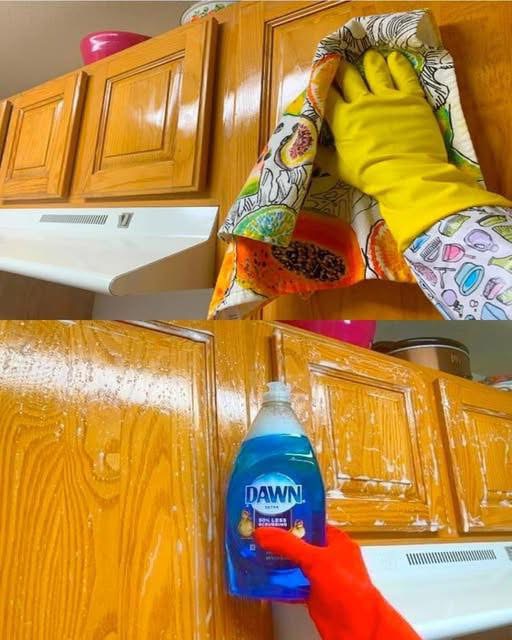
Kitchen cabinets endure daily exposure to grease, steam, food splatter, fingerprints, and dust. Over time, this buildup causes surfaces to look dull, sticky, and worn. A proper deep-cleaning routine not only restores their appearance but also protects the finish and extends their lifespan.
This comprehensive guide covers preparation, deep degreasing, stain removal, material-specific care, and long-term maintenance.
Why Cabinets Become Dull and Sticky
- Cooking grease becomes airborne and settles on surfaces.
- Steam softens finishes, allowing grime to cling more easily.
- Hands transfer oils and dirt to handles and edges.
- Cleaning with too much water can damage finishes over time.
Understanding the cause helps prevent future buildup.
Step 1: Gather Proper Supplies
- Warm water
- Mild dish soap (such as Dawn)
- White vinegar
- Baking soda
- Microfiber cloths (multiple)
- Soft sponge
- Soft-bristle toothbrush
- Spray bottle
- Dry towels
- Bucket
- Optional: degreaser safe for cabinets
- Optional: wood polish (such as Pledge)
Avoid harsh chemicals unless specifically labeled safe for cabinetry.
Step 2: Empty and Prep the Area
- Remove items from inside cabinets.
- Remove shelf liners if present.
- Lay towels on countertops to protect surfaces.
- If possible, remove knobs and handles for separate cleaning.
This allows full access to grime-prone areas.
Step 3: Initial Dust and Surface Removal
Before using liquids:
- Wipe all cabinet surfaces with a dry microfiber cloth.
- Pay special attention to top edges where dust accumulates.
Removing loose dust prevents turning it into muddy residue during washing.
Step 4: Basic Degreasing Wash
Mix:
- 2 cups warm water
- 1–2 teaspoons dish soap
Procedure:
- Dip cloth into solution and wring thoroughly.
- Wipe from top to bottom in sections.
- Focus on areas near the stove first.
- Rinse cloth frequently.
- Wipe again with clean damp cloth.
- Dry immediately with towel.
Important: Never leave cabinets wet. Water damage is one of the biggest causes of dull finishes.
Step 5: Heavy Grease Removal
For thick, sticky buildup:
Mix:
- Equal parts white vinegar and warm water.
Lightly spray or apply with cloth.
Let sit 1–2 minutes (do not let dry on surface).
Wipe gently.
Dry immediately.
For very stubborn grease:
- Apply a small amount of baking soda paste (baking soda + few drops of water).
- Rub gently with soft sponge.
- Wipe clean and dry.
Do not scrub aggressively.
Step 6: Cleaning Inside Cabinets
Interior surfaces collect crumbs and dust:
- Vacuum crumbs first.
- Wipe with mild soapy solution.
- Dry thoroughly before replacing items.
Allow cabinets to air out briefly before restocking.
Step 7: Cleaning Hardware Thoroughly
Grease builds up heavily on handles.
- Soak hardware in warm soapy water 15–20 minutes.
- Scrub with toothbrush.
- Rinse and dry completely.
For brass or specialty finishes, avoid vinegar and use mild soap only.
Step 8: Deep Care by Cabinet Type
Painted Cabinets
- Avoid harsh scrubbing.
- Use mild soap only.
- Vinegar should be diluted and used sparingly.
Wood or Stained Cabinets
- Avoid excessive vinegar.
- Always dry immediately.
- Apply wood polish lightly and buff gently.
Laminate Cabinets
- Safe for vinegar solution.
- Avoid abrasive scrubbers that can scratch surface.
High-Gloss Cabinets
- Use microfiber only.
- Avoid baking soda (can scratch).
Step 9: Restoring Shine
For wood cabinets:
- Apply a small amount of wood-safe polish.
- Buff in circular motions with clean cloth.
- Do not overapply; excess polish attracts dust.
For laminate or painted cabinets:
- Simply buff dry with microfiber cloth.
Step 10: Preventing Future Grease Buildup
- Use exhaust fan every time you cook.
- Wipe cabinets weekly with damp microfiber cloth.
- Immediately clean splatters.
- Install splatter guard behind stove if needed.
- Clean above stove more frequently than other areas.
Common Mistakes to Avoid
- Using bleach or ammonia
- Using steel wool
- Soaking cabinets with water
- Mixing strong chemicals
- Ignoring drying step
These can permanently damage finishes.
Recommended Cleaning Schedule
Light wipe-down: Weekly
Deep clean: Every 2–3 months
Hardware cleaning: Every 3–4 months
High-cooking households may need more frequent cleaning.
Final Results You Should Notice
- Less stickiness
- Restored shine
- Brighter cabinet color
- Cleaner smell
- Smoother texture
Proper care can make cabinets look years newer without refinishing.