
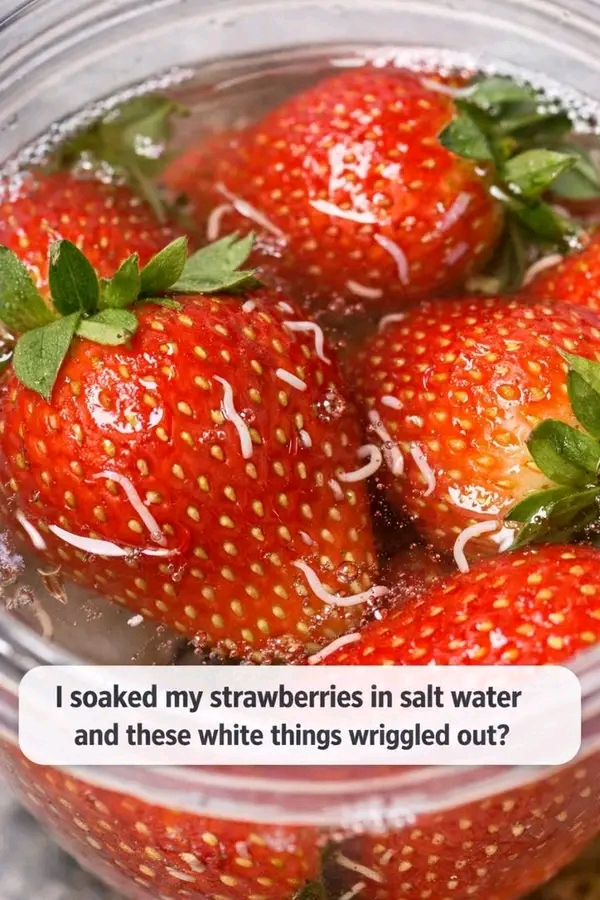
If you’ve ever soaked fresh strawberries in salt water and noticed tiny white, wriggling creatures emerging from the fruit, you’re not alone—and you’re certainly not the first to feel surprised or even a little uneasy. This phenomenon has gone viral multiple times across social media, sparking curiosity, concern, and plenty of debate about food safety, cleanliness, and what really lives inside our fresh produce. While the sight can be unsettling, the explanation is rooted in natural biology and agricultural reality, and understanding it can help you make informed, confident choices in your kitchen.
Strawberries, like many fresh fruits, are grown outdoors where they are exposed to the natural environment. This includes soil, water, insects, and microorganisms. The tiny white worms that sometimes emerge after soaking strawberries in salt water are typically the larvae of small insects—most commonly fruit flies or similar species. One of the most frequently cited culprits is the spotted wing drosophila, a type of fruit fly that lays its eggs inside soft fruits like strawberries, raspberries, and blueberries. These eggs hatch into larvae, which remain inside the fruit as it ripens.
Under normal circumstances, these larvae are extremely small and difficult to detect. They live inside the fruit and are often consumed unknowingly, as they do not affect the taste, smell, or overall quality of the strawberry in any obvious way. However, when strawberries are submerged in salt water, the change in environment causes the larvae to emerge. The salt solution irritates them, prompting them to wriggle out of the fruit in search of a more suitable environment. This is why you may suddenly notice movement in what appeared to be perfectly fresh, clean strawberries.
It’s important to emphasize that this is not a sign that your strawberries are spoiled or unsafe. In fact, this occurrence is quite common in fresh, minimally processed produce, especially when it is organically grown or not heavily treated with pesticides. The presence of insect larvae in fruits is a natural part of the agricultural ecosystem. While it may not be appetizing to think about, it does not necessarily pose a health risk. Most food safety authorities agree that accidentally consuming such larvae is generally harmless, as they are not known to carry diseases that affect humans.
That said, the idea of eating insects—even unintentionally—can be uncomfortable for many people. This is where proper washing and cleaning methods come into play. Soaking strawberries in salt water is actually one of the more effective ways to clean them thoroughly. The salt helps to draw out not only larvae but also dirt, pesticides, and other residues that may be present on the surface or within the fruit. A typical method involves dissolving one to two teaspoons of salt in a bowl of water and soaking the strawberries for about five to ten minutes. After soaking, the strawberries should be rinsed היט thoroughly under clean running water to remove any remaining salt and debris.
Another popular cleaning method involves using a mixture of vinegar and water. Vinegar has natural antibacterial properties and can help kill surface bacteria and mold spores. However, vinegar does not have the same effect on larvae as salt water does, so it may not cause them to emerge in the same visible way. Some people prefer to use both methods—first soaking in salt water to remove larvae, followed by a vinegar rinse for additional sanitation.
It’s also worth noting that not all strawberries will contain larvae. The likelihood depends on several factors, including where the strawberries were grown, how they were harvested, and how long they have been stored. Strawberries that are freshly picked from local farms or grown without chemical pesticides may be more likely to contain small insects, simply because they are part of a more natural growing environment. On the other hand, commercially grown strawberries that undergo more rigorous processing and treatment may have fewer visible pests, though they may still carry residues that require washing.
For those who grow their own strawberries at home, this issue can be even more relevant. Homegrown fruits are often prized for their flavor and lack of chemical treatments, but they are also more exposed to insects. Regular inspection of plants, proper spacing, and the use of protective netting can help reduce the presence of fruit flies and other pests. Harvesting strawberries promptly when they are ripe and avoiding overripe fruit on the plant can also minimize infestation, as insects are more attracted to soft, sweet, and damaged fruit.
Understanding the life cycle of fruit flies can also provide insight into how and why larvae end up in strawberries. Adult flies are attracted to ripe fruit, where they lay their eggs just beneath the surface. These eggs hatch quickly—sometimes within a day or two—into larvae that begin feeding on the fruit. Because strawberries have a soft, porous structure, they are particularly susceptible to this kind of infestation. The larvae continue to grow inside the fruit until they are ready to pupate, at which point they may leave the fruit to continue their development elsewhere.
From a nutritional standpoint, the presence of larvae does not significantly alter the value of the fruit. Strawberries remain rich in vitamins, antioxidants, and fiber, making them a healthy addition to your diet. The key is ensuring that they are cleaned properly before consumption. While the idea of larvae may be off-putting, it’s important to remember that complete sterility in fresh produce is nearly impossible without extensive processing, which can also reduce nutritional quality.
Consumer awareness has increased in recent years, thanks in part to viral videos and online discussions. While this has led to greater scrutiny of food sources, it has also highlighted the importance of understanding where our food comes from and how it is produced. Rather than causing alarm, the presence of larvae can be seen as a reminder of the natural origins of our food and the complex ecosystems involved in agriculture.
For those who remain concerned, there are additional steps that can be taken. Purchasing strawberries from trusted sources, such as reputable grocery stores or certified organic farms, can provide some assurance of quality. Storing strawberries properly in the refrigerator and consuming them within a few days of purchase can also help maintain freshness and reduce the likelihood of insect activity. Avoiding strawberries that appear overly soft, damaged, or moldy is another simple but effective precaution.
In commercial food production, various methods are used to minimize the presence of pests, including controlled environments, selective breeding, and approved pesticides. However, no method is entirely foolproof, and occasional occurrences of larvae are still possible. Regulatory agencies set acceptable limits for such contaminants, recognizing that zero presence is not always achievable in natural products. These standards are based on extensive research and are designed to ensure consumer safety.
It’s also interesting to note that in many cultures around the world, insects are considered a normal and even desirable part of the diet. While this may not align with everyone’s preferences, it provides a broader perspective on the issue. In the context of global food systems, the occasional presence of insect larvae in fresh produce is relatively minor compared to other food safety concerns.
Ultimately, the decision of how to handle strawberries—and whether to use salt water soaking—comes down to personal comfort and preference. For those who want the cleanest possible fruit, soaking in salt water followed by thorough rinsing is a simple and effective method. For others, a quick rinse under running water may be sufficient, especially if the strawberries are consumed promptly.
In conclusion, the appearance of white, wriggling larvae in strawberries after soaking them in salt water is a natural and explainable phenomenon. It reflects the realities of growing fresh produce in an open environment and does not necessarily indicate a problem with the fruit. With proper cleaning and handling, strawberries can be enjoyed safely and deliciously. Understanding the science behind what you’re seeing can transform a moment of surprise into one of knowledge—and perhaps even appreciation for the intricate journey from farm to table.